

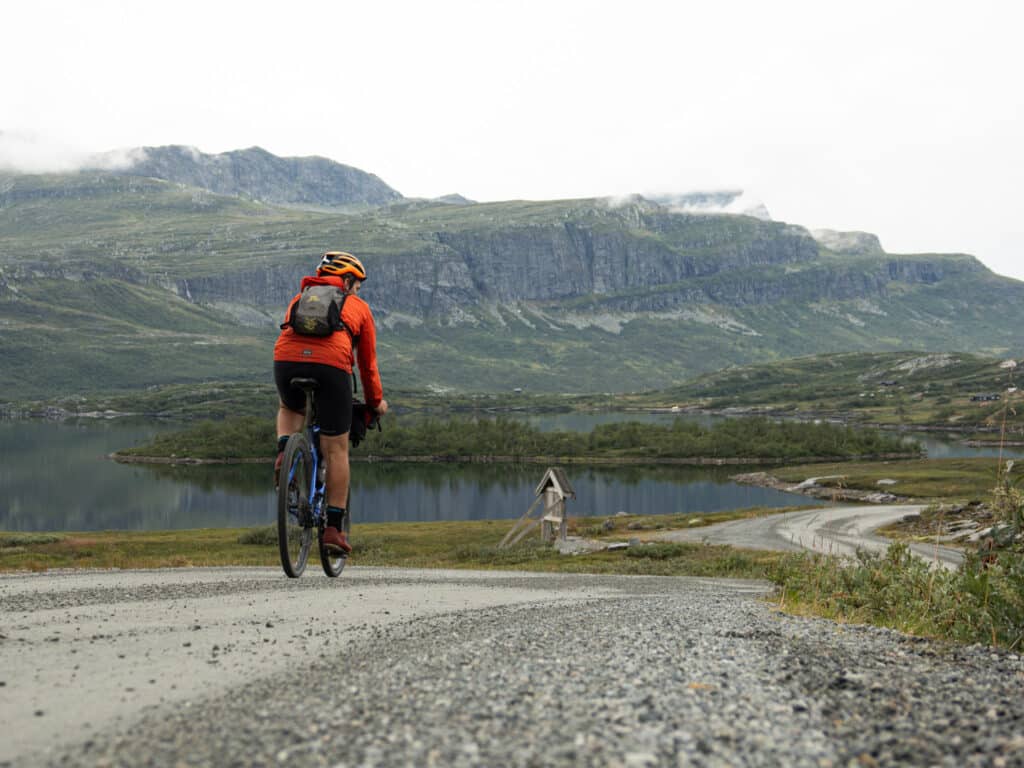
For Scotland-based gravel guide author and filmmaker Markus Stitz, the Mjølkevegen is one of Norway’s most beautiful cycling routes. And while it offers plenty for seasoned riders, it is also manageable for less experienced gravel cyclists — especially with luggage transport, comfortable accommodation and the option of an e-bike.
As preparation for a guided tour this September with Scottish world record holder and friend Mark Beaumont, Markus rode the heart of the route in four days last July with his partner Louise — comparing the experience to his many journeys through Scotland.
Experience the Mjølkevegen through Markus’ eyes as he takes on one of Norway’s most scenic cycling routes.
From Oslo to the Mountains
Our journey begins in Oslo, easily accessible from Edinburgh, my home in Scotland, by plane. From here we travel by coach to Fagernes, and from there by bus on to Lemonsjø Fjellstue, where we arrive in the late afternoon, settle into our cosy cabin, and enjoy the view of the lake from the sauna.
We had hoped that the high summer temperatures of the previous weeks would last a few more days. But with a mix of sun, clouds and a bit of rain, the weather on our arrival day is more typical for Norway than the heat of the past few weeks. Like Scotland, Norway gets a fair amount of rain — but it has no midges, which is definitely an advantage.
Our rental bikes are provided by Bike & Hike Jotunheimen, with Jotunheimen Travel taking care of our luggage transfer by van between each accommodation.
Gravel Roads, Toll Roads and Local Encounters
Having written five books about gravel cycling in Scotland, I am intrigued by what Scotland and Norway have in common — and what sets them apart.
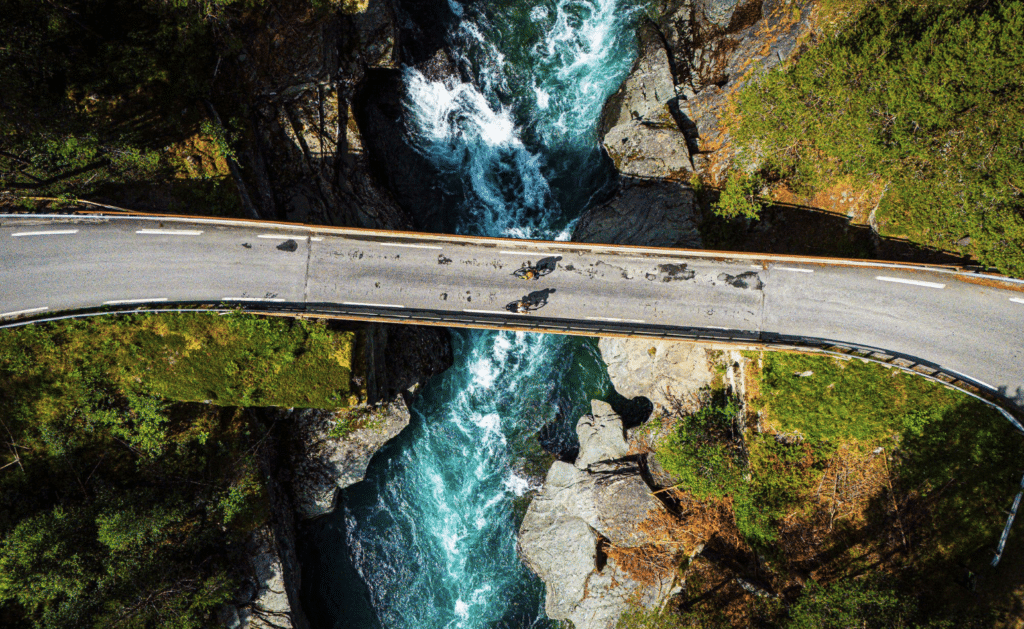
Unlike in Scotland, gravel routes in Norway often follow toll roads. Anything with a motor must pay to use them, while cyclists can ride them for free. As in Scotland, the rest of the Mjølkevegen follows wide gravel tracks and quiet country roads.
Apart from some longer climbs, the route is not technically demanding, but the scenery is stunning. And, as I know so well from Scotland, it is the people we meet along the way who make a cycling trip on the Mjølkevegen truly special.
We are not just moving through the landscape — we also connect with the places and people along the way.
We are personally welcomed by the owners of the mountain hotels and get to learn more about the region from the people who know it best.
Day 1: From Lemonsjø to Ruten Fjellstue
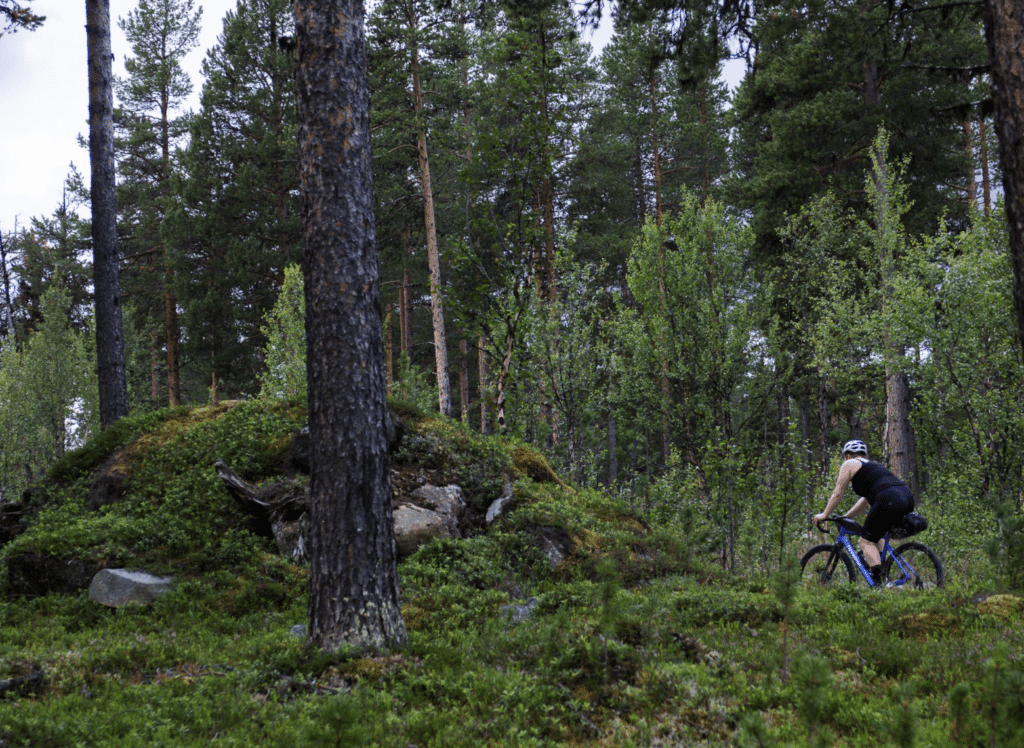
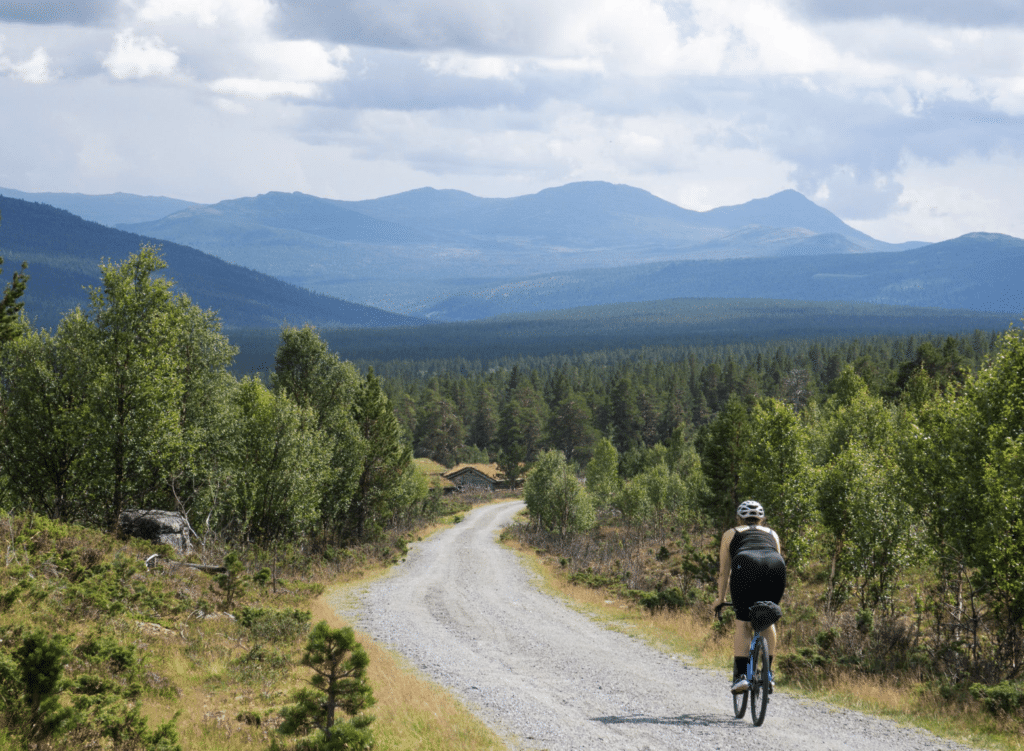
Our first day in the saddle takes us from Lemonsjø Fjellstue via a connecting route to Lake Slangen, and from there along the Mjølkevegen to Ruten Fjellstue.
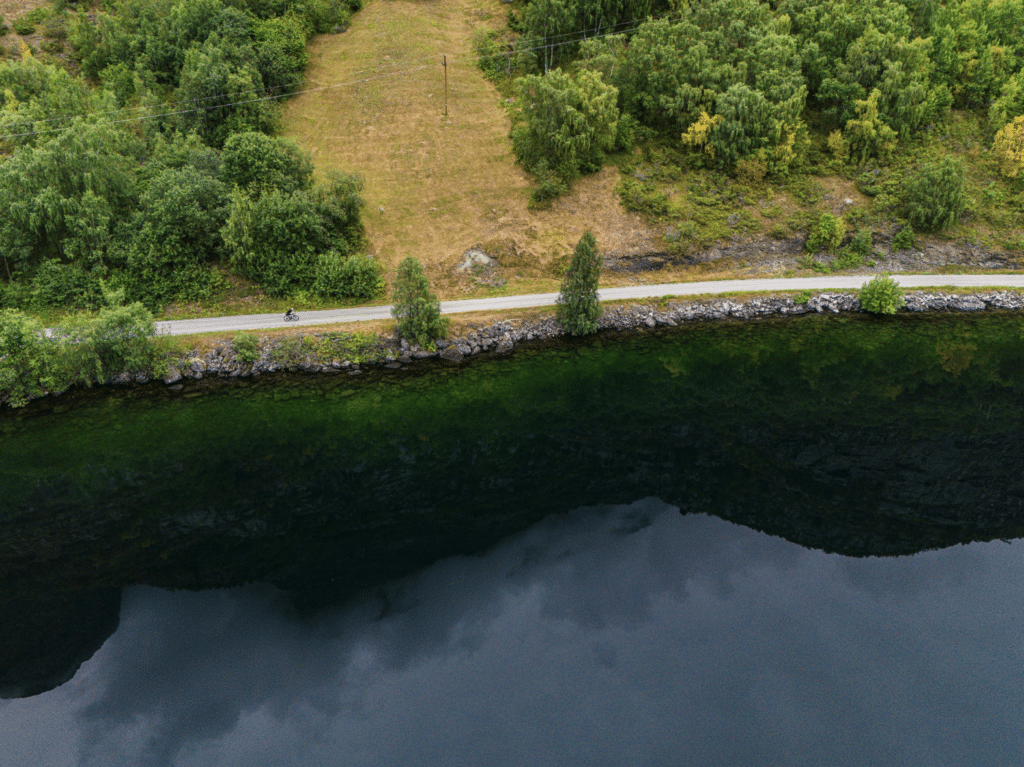
My highlight of the day is the turquoise Sjoa River, from where we follow wide gravel roads past dense coniferous forests and traditional highland farms. While we have great rivers in Scotland, the colour of the rivers in Norway is something special — and the Sjoa is just the beginning of a string of amazing waterways we cross on our journey.
Along the route, milk cans serve as reminders of the road’s original use, connecting the traditional highland farms during the summer months.
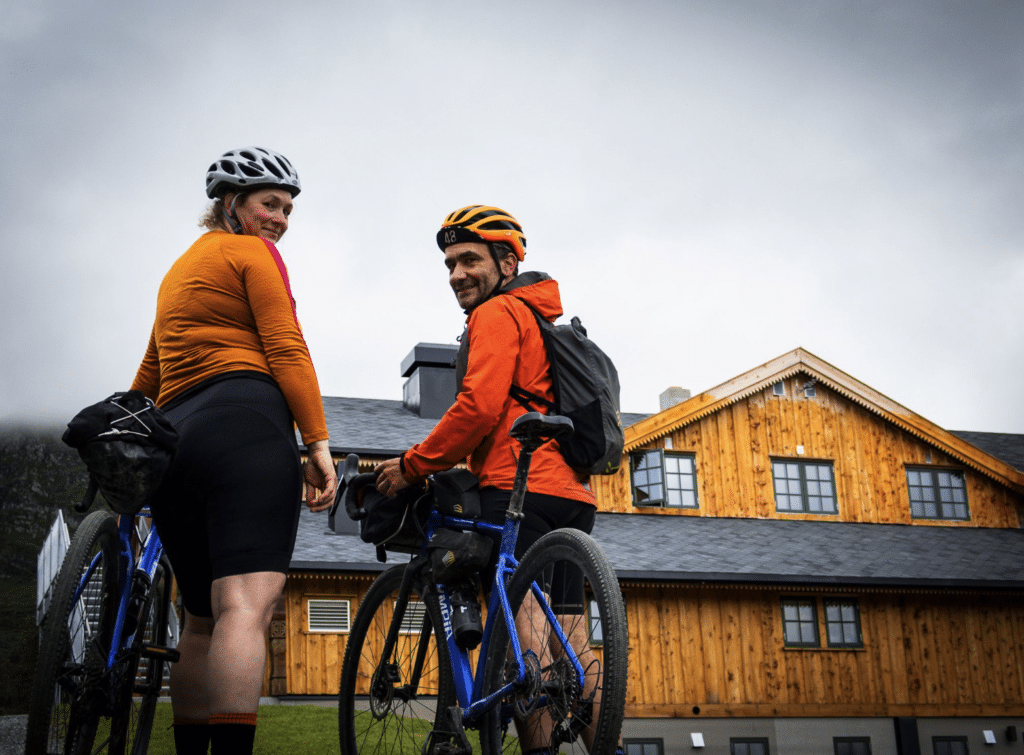
After the final climb of the day, we receive a warm welcome at Ruten Fjellstue, where a delicious three-course meal rounds off a perfect first day.
Day 2: Into the Highlands of Jotunheimen
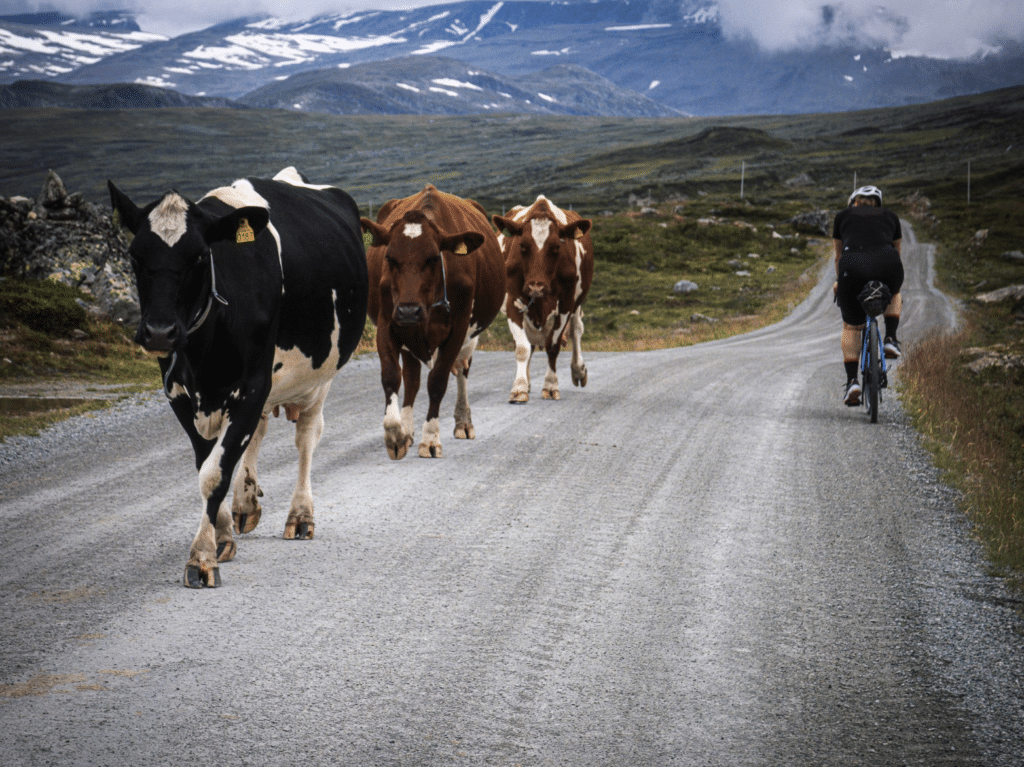
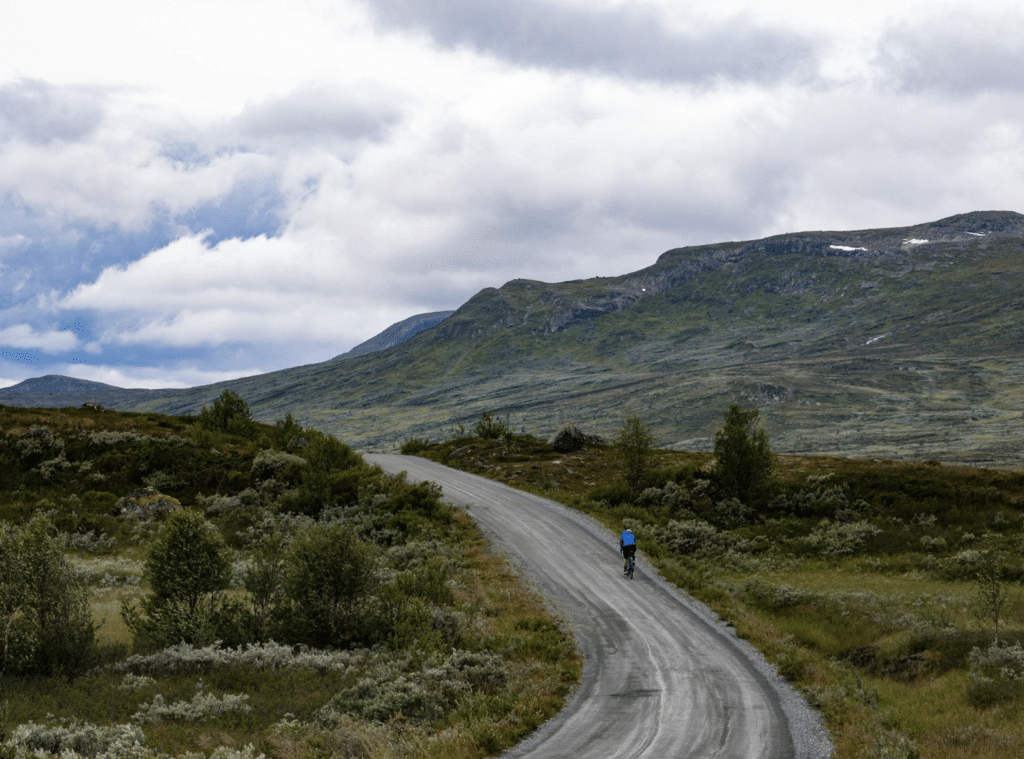
On the second day we continue almost entirely off-road on the Mjølkevegen to Bygdin, passing impressive lakes and open highland landscapes.
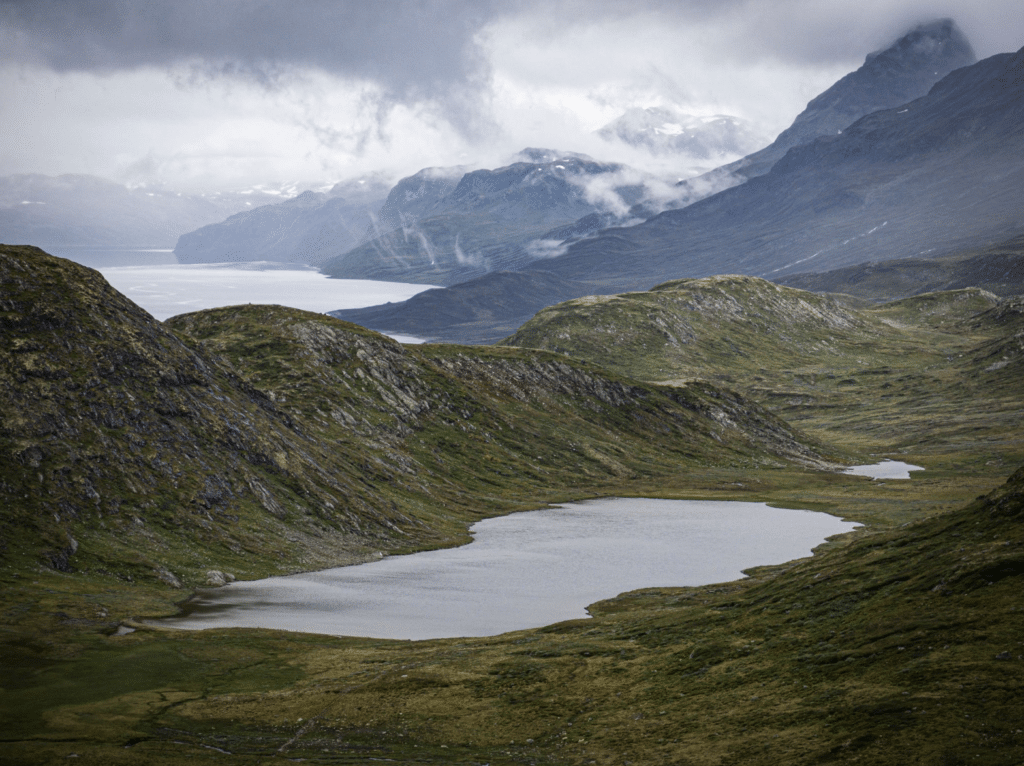
The dense forest of yesterday gives way to a stark mountain landscape, while the peaks of Jotunheimen National Park rise before us. This is the landscape that reminds me most of Scotland — barren and fascinating in equal measure.
What sets Norway apart are the waffles served with brown cheese — something you will not find in the Scottish Highlands.
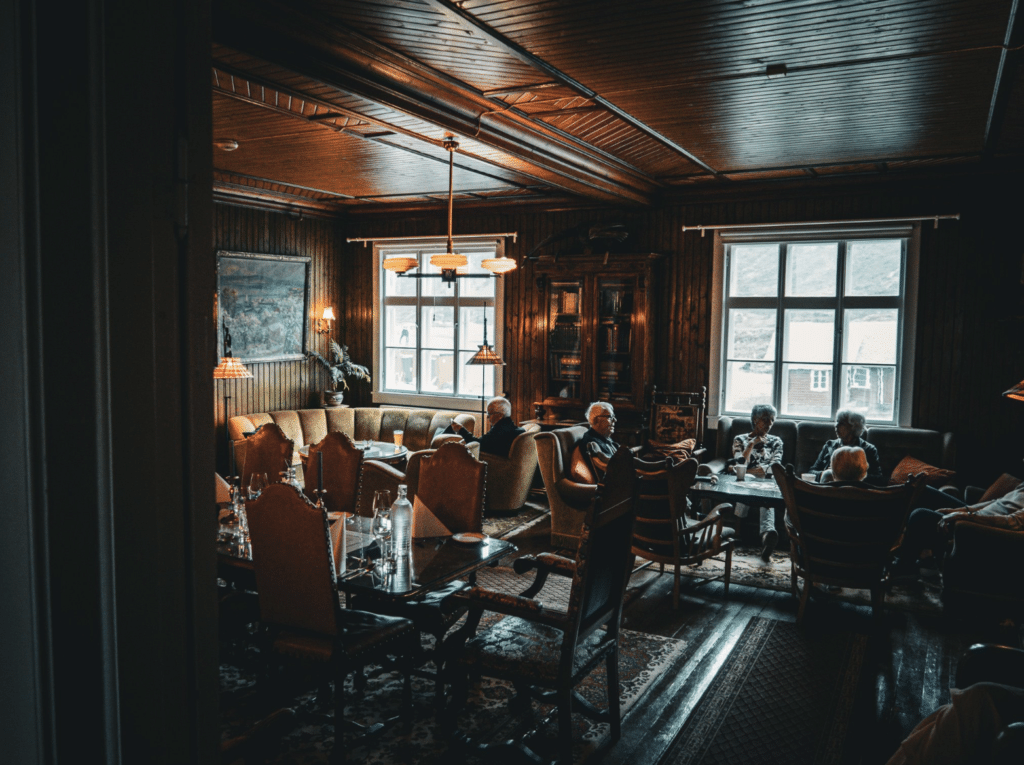
Our hotel on the shore of Lake Bygdin is a stunningly beautiful and rustic wooden house. The atmosphere could not be more relaxing.
Day 3: M/B Bitihorn and Lake Tyin
On the third day, I run up the nearby Synshorn mountain for a change of pace, while Louise relaxes at the hotel.
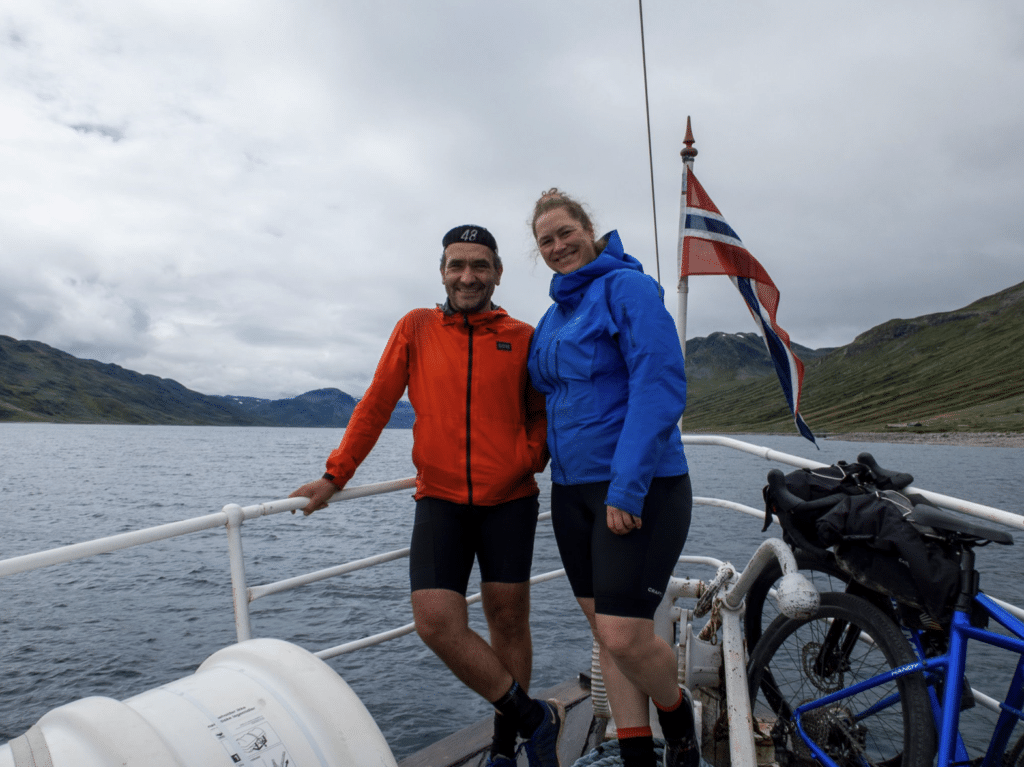
At midday, we take the historic M/B Bitihorn for a two-hour ride across the impressive mountain lake before cycling along a fantastic gravel road by Lake Tyin.
The boat journey feels like crossing Loch Katrine in the Trossachs. But the snow-capped mountains on the opposite shore hint at why this route is only open from late May to September. Norway has proper winters, while parts of Scotland might get a lot of rain, but not much snow any longer.
Our final descent on the road is once again breathtaking, and the sauna at our accommodation rounds off another great day in the saddle.
Filefjellstuene and One of Norway’s Great Gravel Climbs
Filefjellstuene, our accommodation for the night, is a good starting point for one of Norway’s most spectacular gravel climbs.
The climb ascends around 1,000 metres via 42 hairpin bends and offers magnificent views from the fjord up into the highlands. The old mountain road connects Øvre Årdal with Sletterust and Tyin-Filefjell, offering an impressive blend of Norwegian road-building history, industrial heritage and dramatic scenery.
Day 4: The Slettefjell Pass
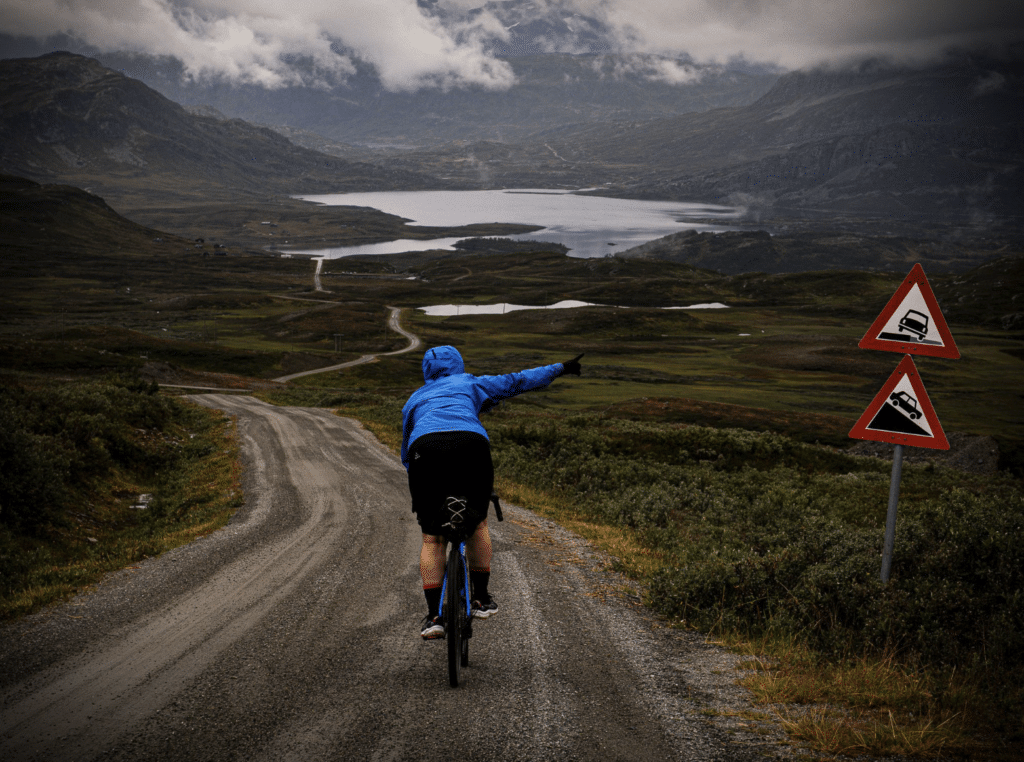
Our highlight on the final day of cycling is the Slettefjell Pass. With an ascent of around 900 metres, this is the Bealach na Bà of Norway.
It is the toughest, but also the most impressive part of our journey on the Mjølkevegen.
The weather? Scottish. While we tackle much of the climb in the rain, the clouds part somewhat on the final stretch, and we enjoy the 360-degree panorama from the highest point of our trip. The gravel descent is our reward.
The hotel in Beitostølen is an ideal endpoint for us. Our bikes will be transported back to the starting point the next day, while we leisurely begin our journey back to Oslo at midday.
Experience the Route Yourself
You can join Markus Stitz and Mark Beaumont on the Mjølkevegen from September 6 to 13.
The trip costs NOK 32,900 — approximately £2,600 — including all accommodation, meals and the opportunity to experience the Mjølkevegen together with two of the most renowned cyclists in the UK.
Read more about the guided Mjølkevegen tour