

There is something special about meeting a group at the beginning of a cycling trip. Everyone has travelled a long way, the bikes are still packed in their boxes, and nobody quite knows yet what the coming days will bring.
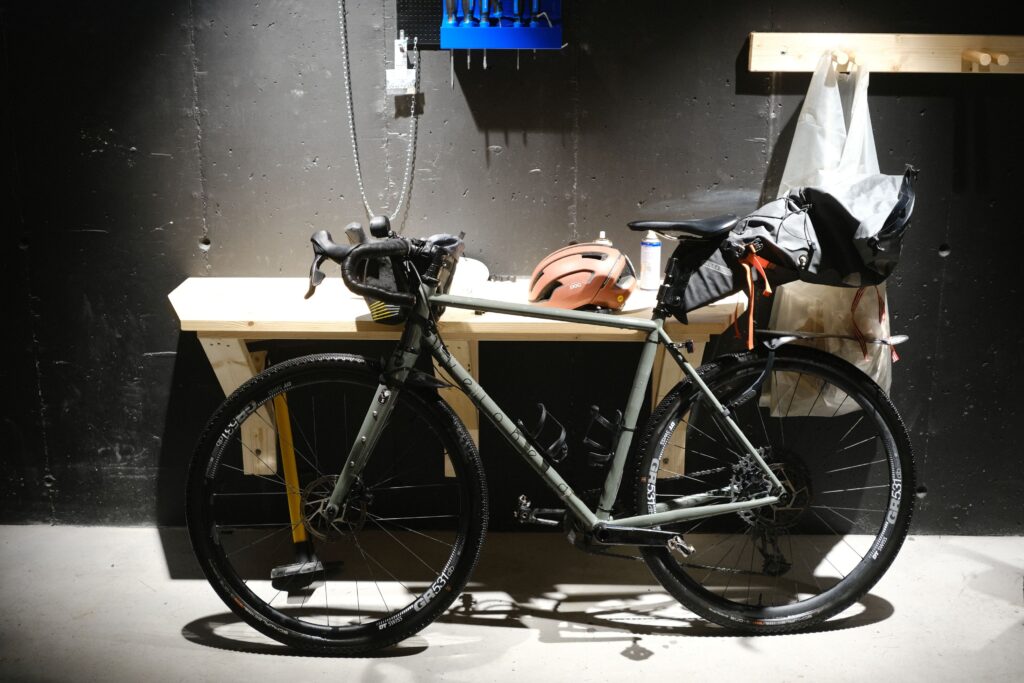
For this six-day gravel adventure, our starting point is Ruten Fjellstue, surrounded by the mountains of Espedalen. After the group arrives from Oslo Airport following a roughly three-hour bus journey, I meet everyone at the mountain lodge there and we get straight to one of the first jobs of the trip: building the bikes.
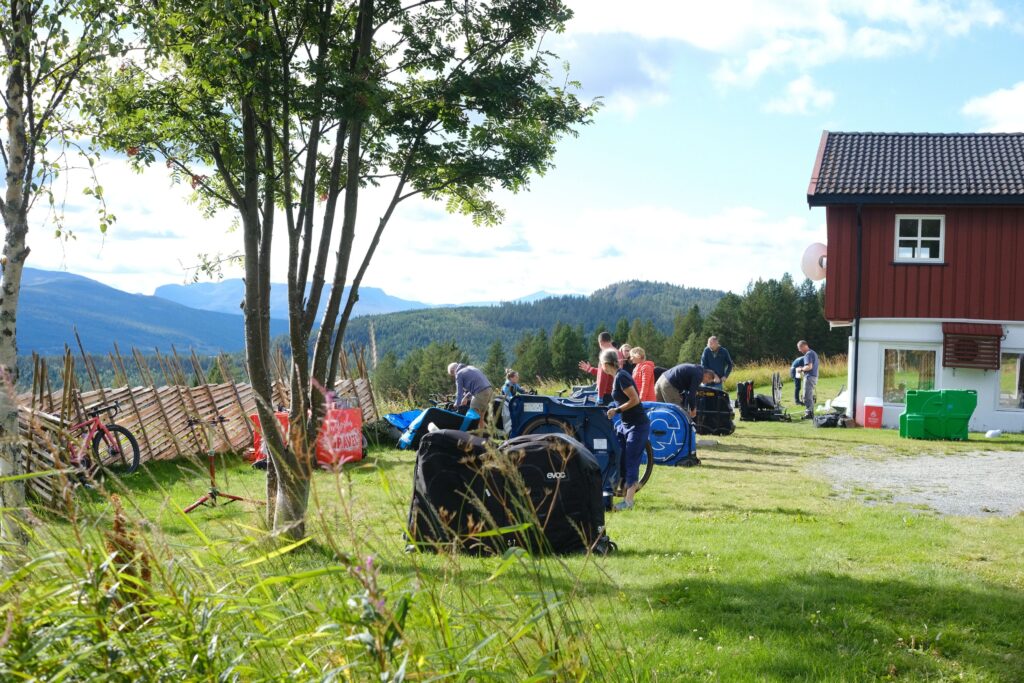
Once everything is assembled and checked, there is still time for a short ride. Rather than simply testing the brakes and gears outside the hotel, we head out for around 15 kilometres and just over an hour of riding. And it is a pretty good introduction to what is waiting for us.
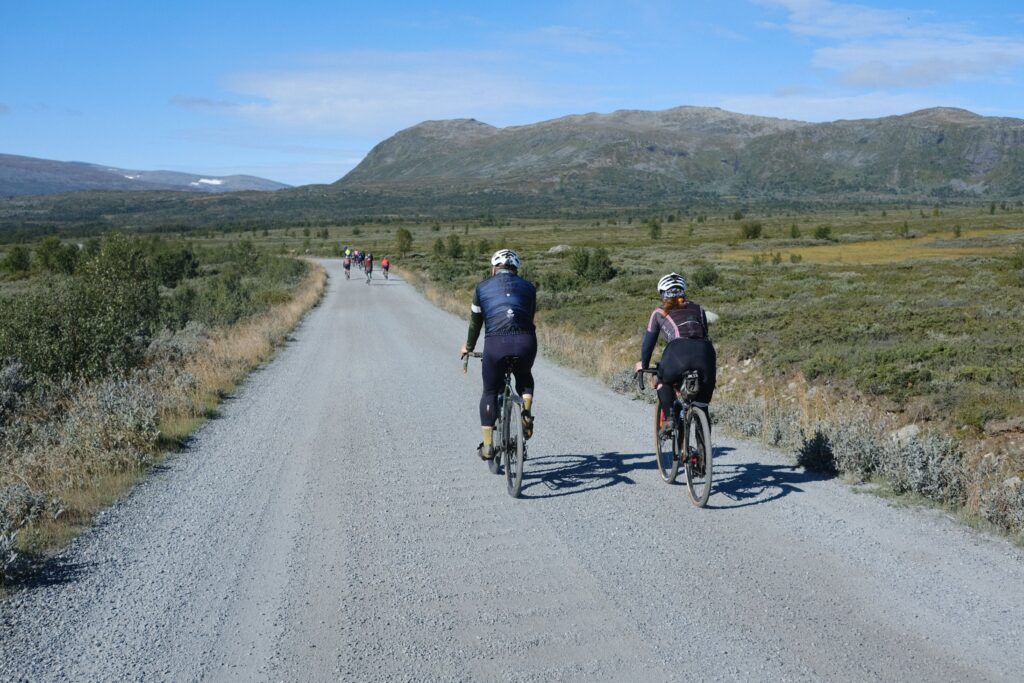
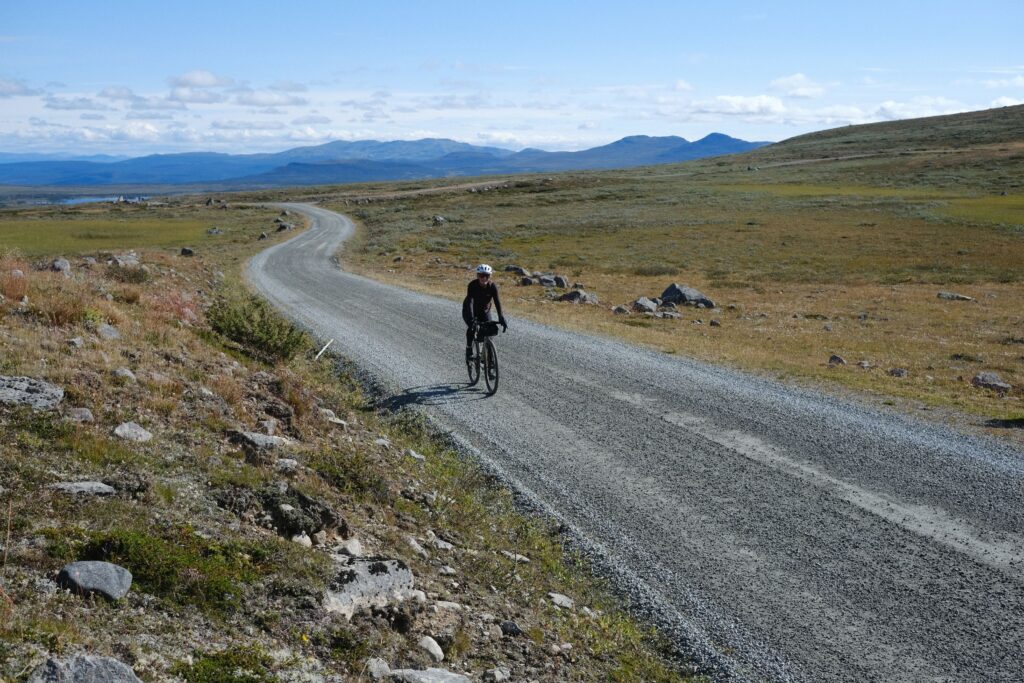
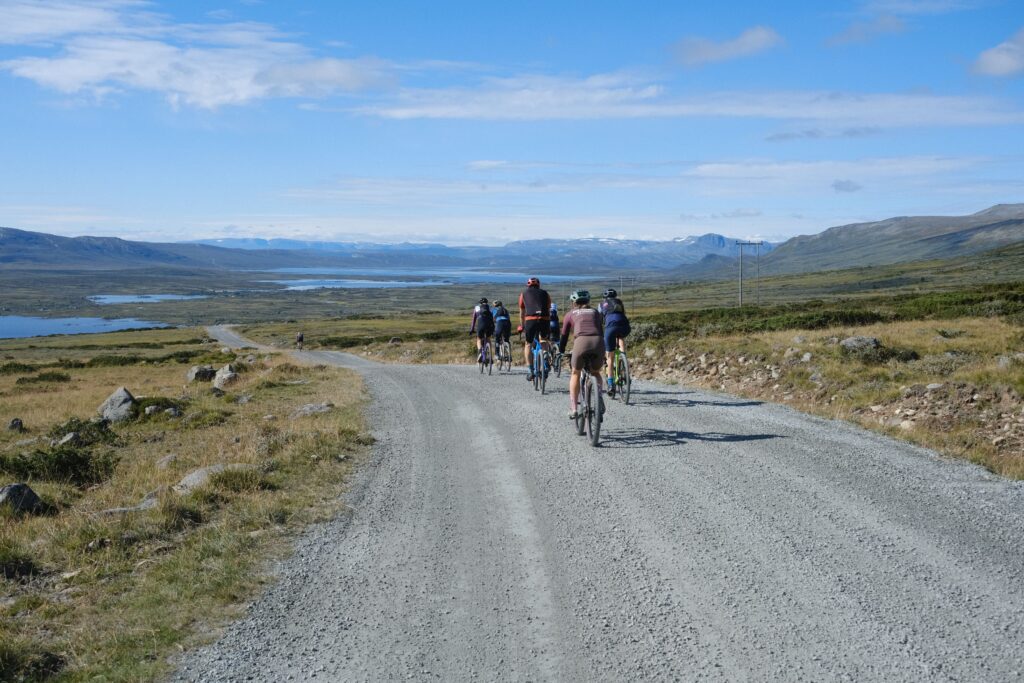
Almost immediately we find smooth gravel roads, climbing into the mountains with wide views in every direction. This is what cyclists like to call champagne gravel – fast, smooth and simply fun to ride. The evening light makes it even better.
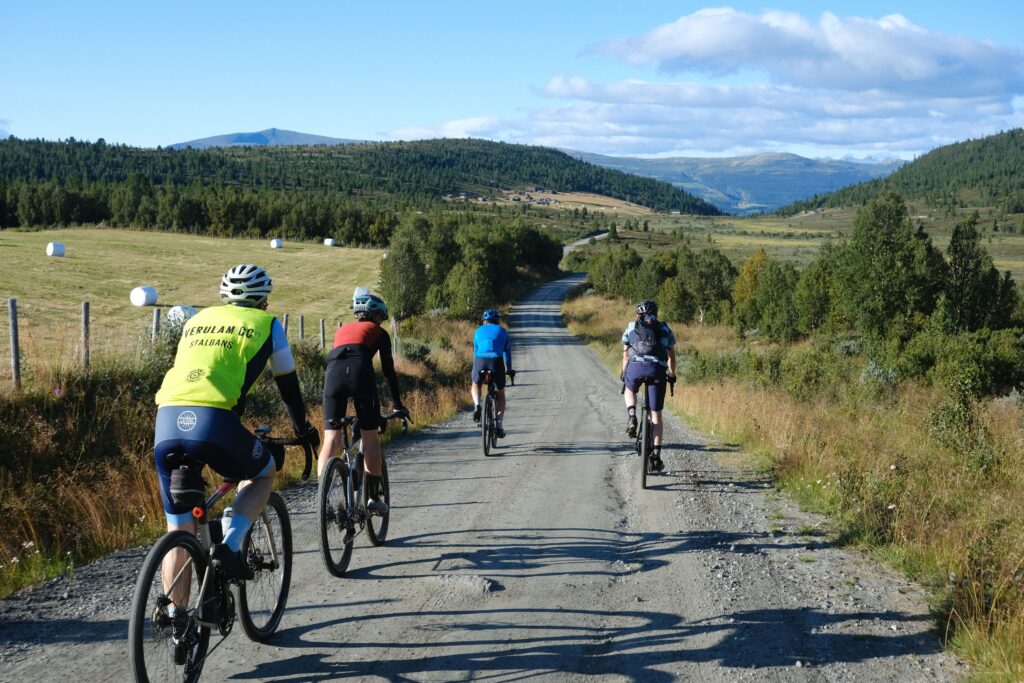
For me as a guide, this first ride is also useful. I get to see how everyone feels on their bikes and the group gets a first impression of the terrain we will be riding during the next few days.
Back at Ruten Fjellstue, we finish the evening with a cosy dinner based on local ingredients. Afterwards, we have a short briefing about the journey ahead and, more importantly, what is waiting for us the following morning.
After a good breakfast, bottles filled and enough snacks packed into our pockets, it is time to properly start our gravel journey.
Stage 1 – From Ruten to Filefjell
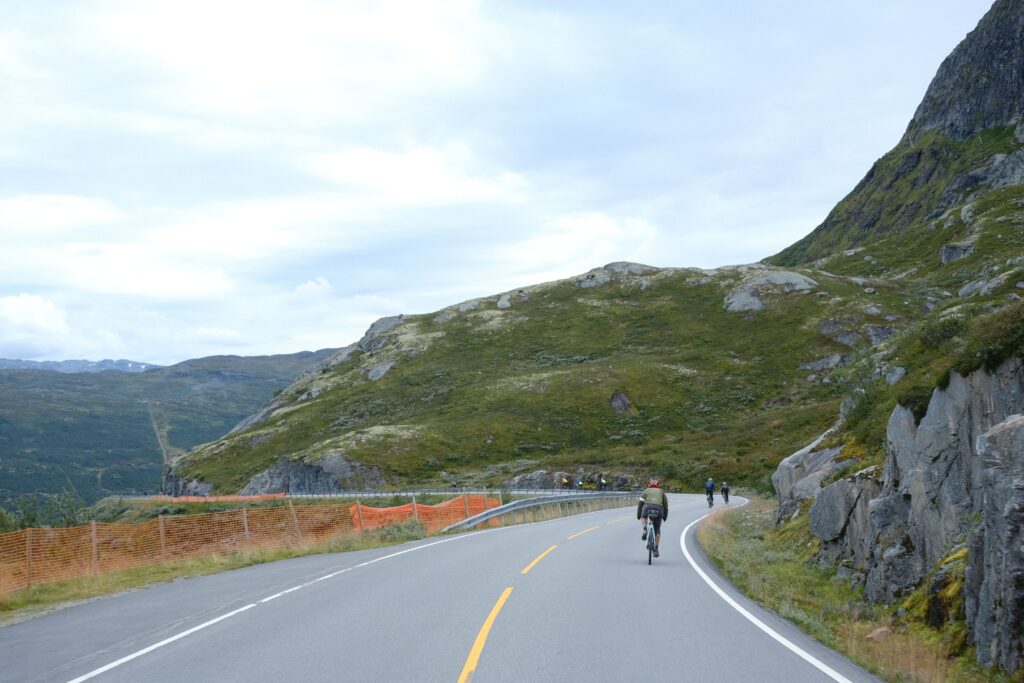
Today is a big one: around 95 kilometres and 1,400 metres of climbing, taking us from Ruten towards Filefjell.
We leave at around nine in the morning. The air is crisp and fresh, exactly the kind of temperature you want when you know there is plenty of climbing ahead.
The first kilometres take us downhill before we reach the first proper climb of the day. Any remaining morning chill quickly disappears as we start working our way uphill.
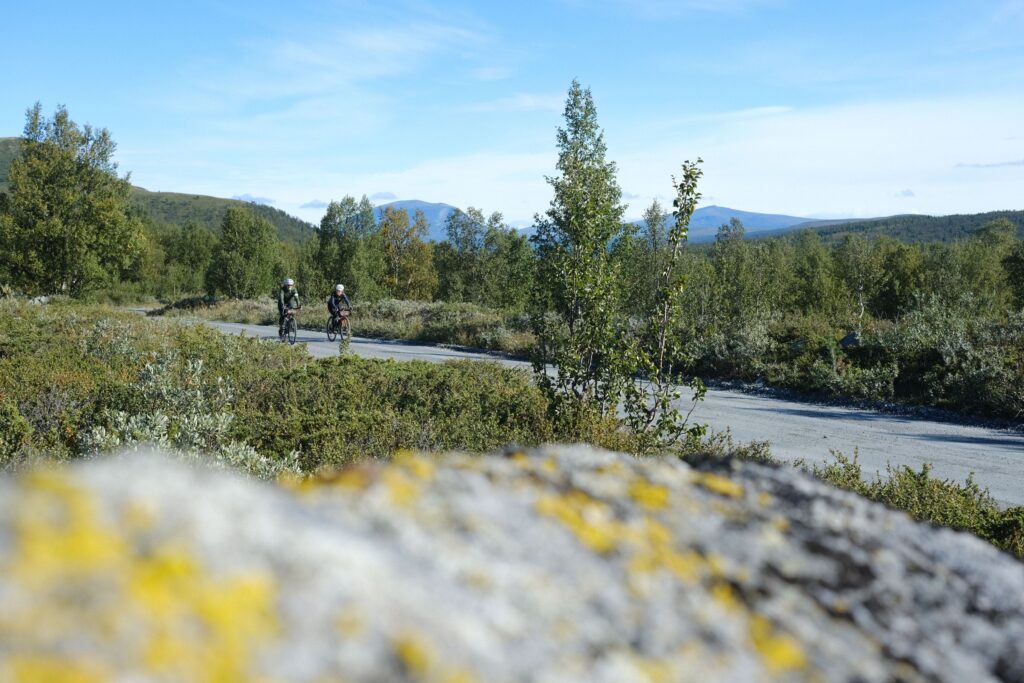
Soon we are out in the open mountain landscape, riding towards the areas surrounding Langsua and Jotunheimen. The roads stretch ahead of us with very little traffic and, for long sections, hardly another person in sight. Instead, our company consists mainly of sheep, cows and the occasional reindeer.
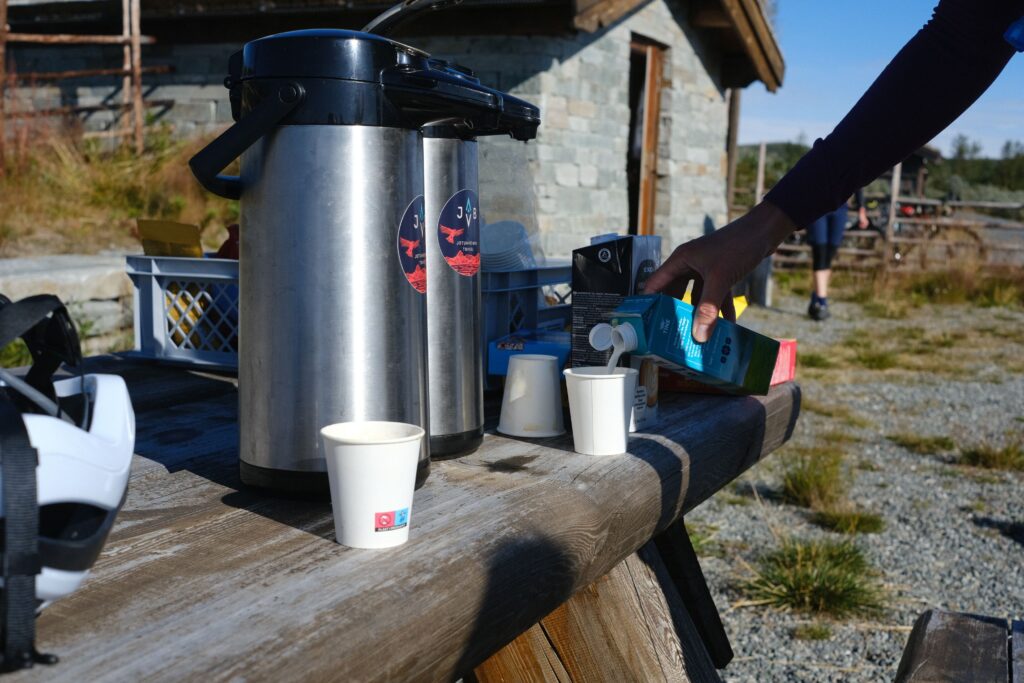
This is one of the things I enjoy most about riding gravel here. You can cover long distances, but the landscape never really feels busy. There is space around you all the time. At around kilometre 26 we make our first proper stop, grab something to eat and refill before continuing along the mountain roads.
From here the landscape becomes increasingly open. We continue along Jotunheimvegen, gradually gaining views towards the higher peaks of Jotunheimen. And today the weather is completely on our side.
Blue sky, good temperatures and clear views towards the mountains. Days like this make my job as a guide fairly easy – you mainly have to remember to tell everyone that we eventually need to keep riding.
Coffee, waffles and M/B Bitihorn
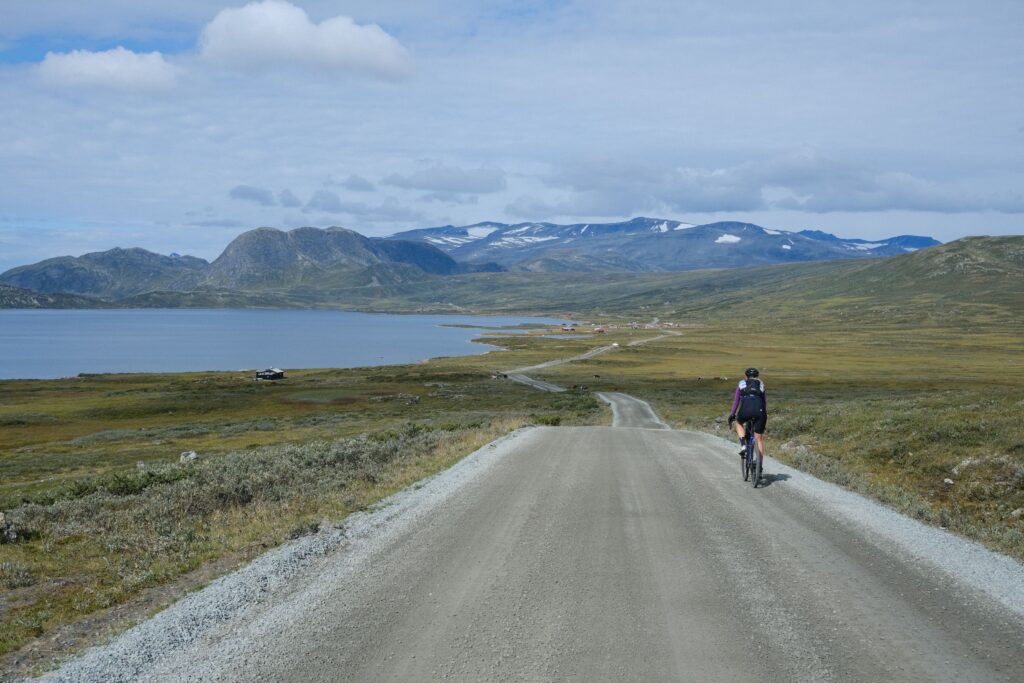
Around 12:30 we roll down towards Bygdin Hotel and Lake Bygdin. Our timing is good, which means there is no need to rush straight onto the boat. Instead, we sit outside in the sun with coffee and a waffle while looking across the lake and the mountains. It is difficult to imagine a better lunch stop on a gravel ride.
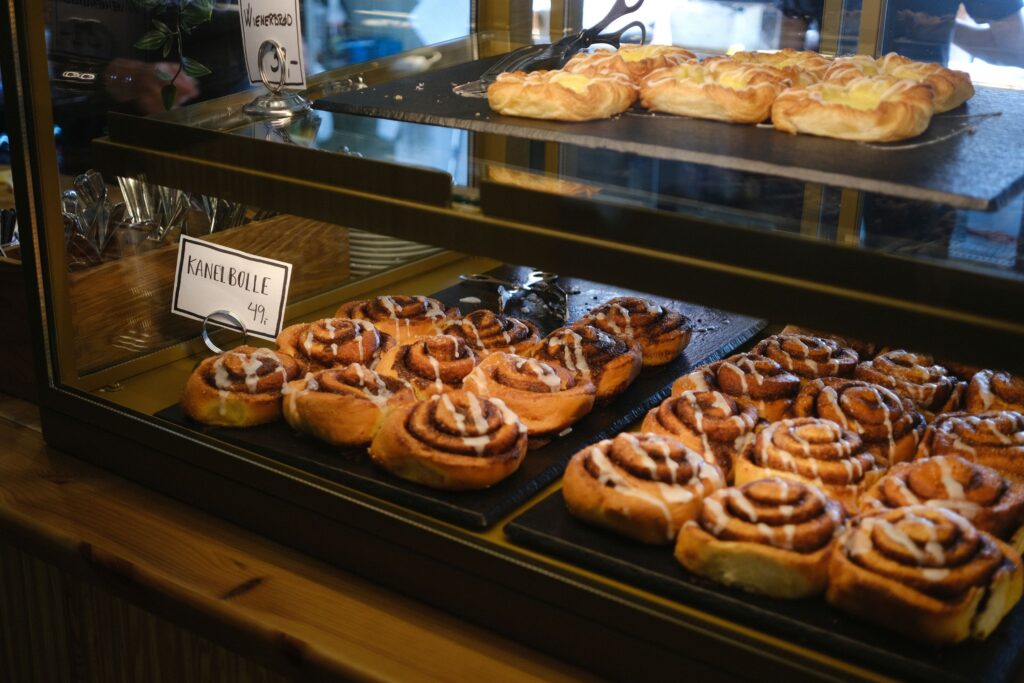
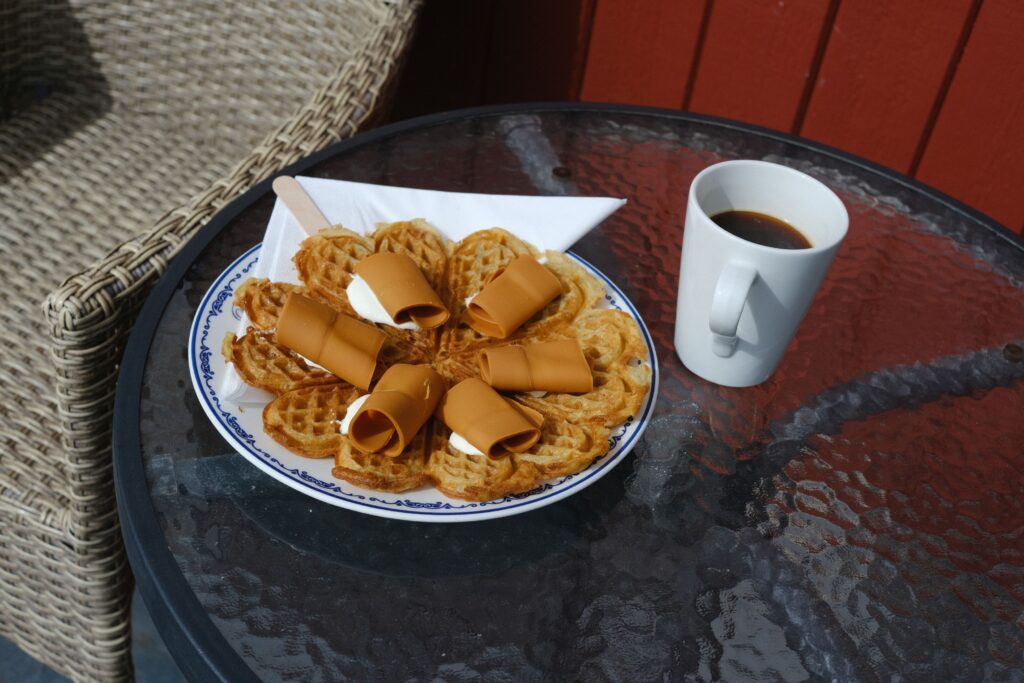
Shortly afterwards we bring the bikes aboard M/B Bitihorn, the historic boat connecting Bygdin with Torfinnsbu and Eidsbugarden.
For the next couple of hours, the bikes get a break and we simply enjoy the journey.
Lake Bygdin cuts deep into Jotunheimen, surrounded by mountains reaching close to and above 2,000 metres. From the deck we can see peaks, valleys and glaciers while the boat slowly makes its way westwards.
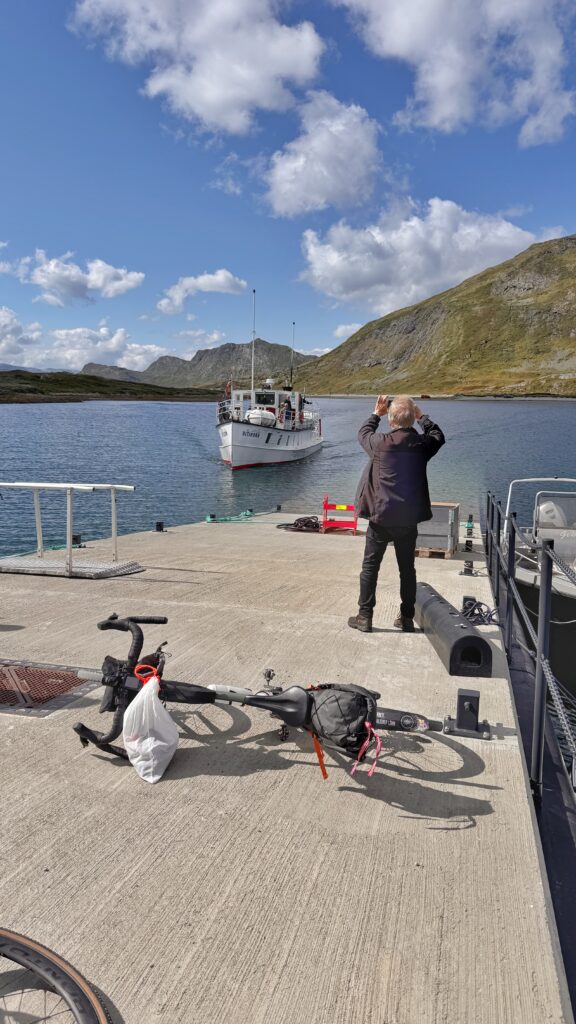
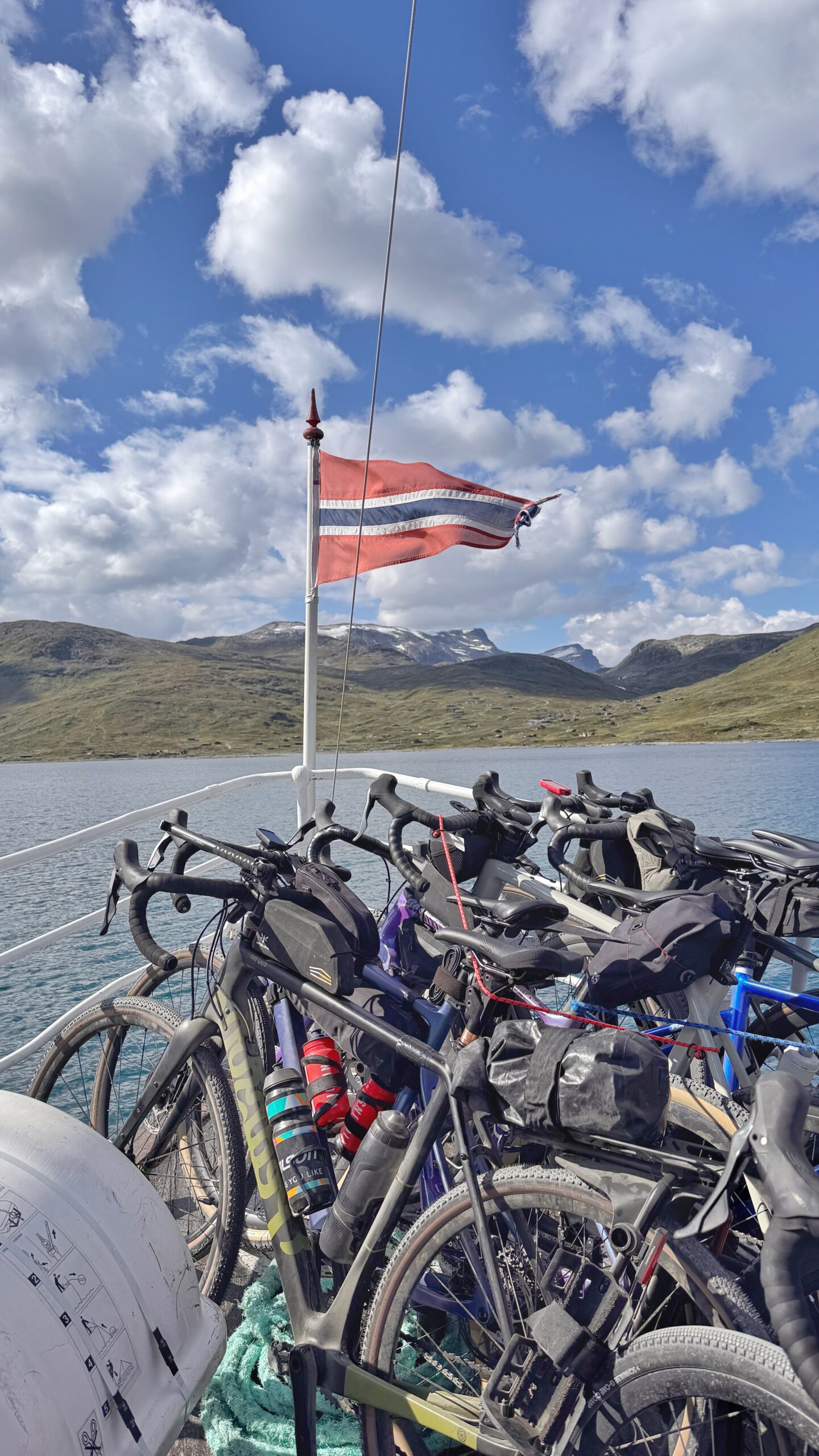
Combining cycling with the boat is one of my favourite parts of this route. It changes the rhythm of the day completely. One moment you are working hard on the bike, and the next you are sitting on deck with a coffee, watching some of Norway’s highest mountains pass by.
A detour into Koldedalen
We arrive at Eidsbugarden in the afternoon, but we are not quite ready to head directly towards our accommodation.The weather is simply too good. After another quick refuelling stop, we get back on the bikes and make a detour into Koldedalen. It is well worth the extra kilometres.The gravel road takes us deeper into the mountains, surrounded by sharp peaks and glaciers. We eventually stop, park the bikes and sit for a while in the warm afternoon sun. Nobody is in a hurry.
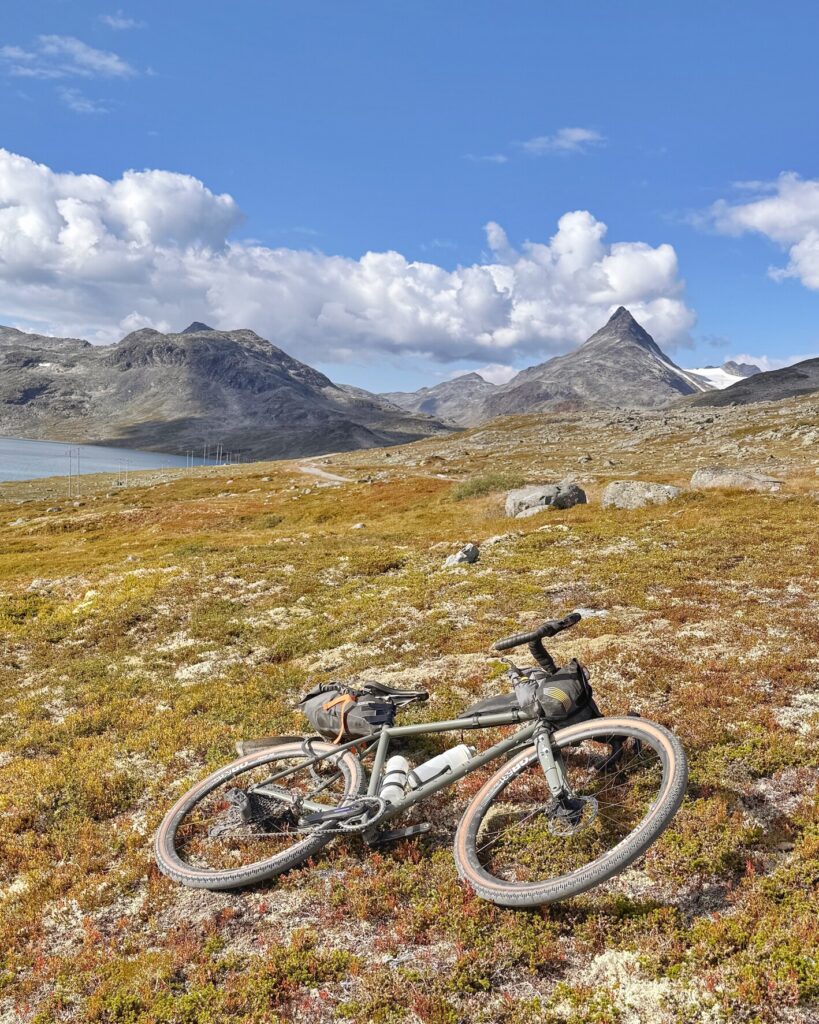
Sometimes those are the moments you remember best from a trip. Not necessarily the biggest climb or the fastest descent, but simply sitting somewhere in the mountains, looking around and realising how lucky you are with the day.
Eventually we turn around and begin the final stretch towards Filefjell.
After a long day on the bikes, our mountain hotel is a very welcome sight. Modern rooms, good food and – particularly appreciated after almost 100 kilometres of riding – a sauna. Some of the group head straight for it.
Later we meet again around the table for a well-earned three-course dinner. There is plenty to talk about after a day like this: the climbs, the endless gravel roads, the boat journey, the mountains and that afternoon stop in Koldedalen.
Then it is time for bed. Because tomorrow morning we fill the bottles, pack the snacks and do it all again.
Stage 2 – From Filefjell to Gomobu
At nine o’clock we are ready to go again. The bikes are checked, bottles filled, snacks packed and, with another beautiful summer day ahead of us, sunscreen is definitely necessary. After yesterday’s long ride through Jotunheimen, today will show us a different side of the Norwegian mountains. We start by rolling down the valley towards the Mjølkevegen, enjoying an easy beginning before joining the route along the large Vangsmjøsa lake.
And conditions could hardly be better. There is almost no wind, and the surface of the lake is completely calm. Cycling along the shore feels a little like riding through a Norwegian postcard – or even through a painting.
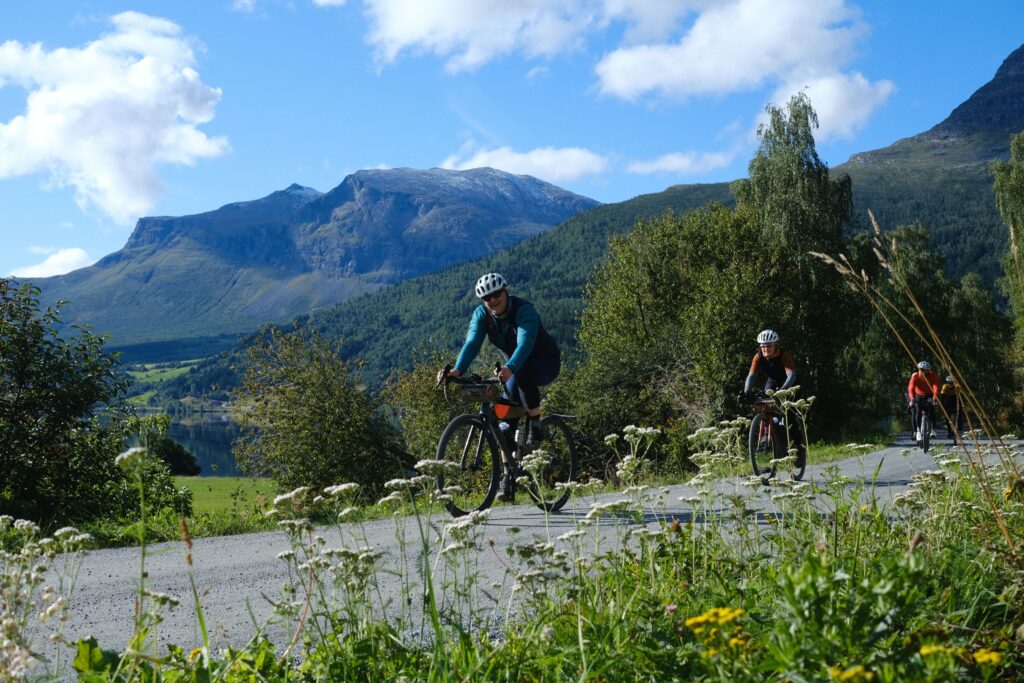
Red houses, green fields, sheep grazing beside us, blue sky above and mountains reflected in the water.
At around kilometre 25 we stop for the first proper refuelling of the day. It is one of those mornings where there is no reason to rush. The weather is perfect, everyone is riding well, and we know that the biggest challenge of the day is still waiting ahead.
The big climb to Syndinstøga
From Vangsmjøsa, the road starts taking us upwards towards Syndinstøga. Just a quick downhill to the valley floor and a cold drink at the local gas before the uphill is appearing on our bike computers and as well in real life.
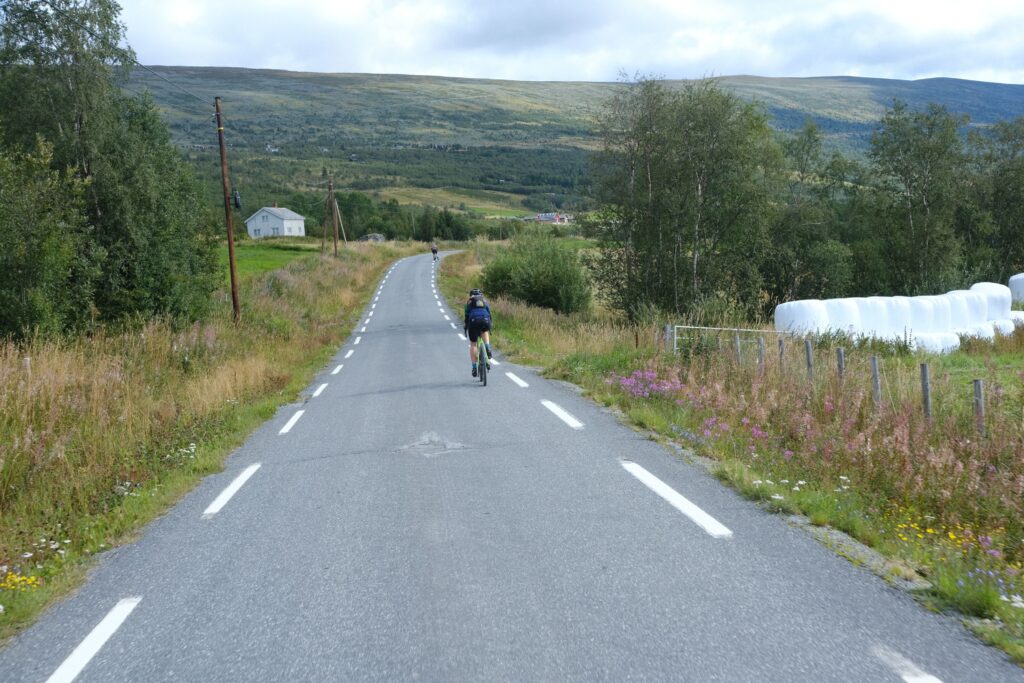
And when I say upwards, I mean upwards. Ahead of us is the biggest continuous climb of the entire trip, with almost 600 metres of elevation gain. For anyone who is not used to long mountain climbs on a bike, this can certainly be tough. There is no real shortcut. You simply find your rhythm, use the gears you have and keep turning the pedals.
That is also one of the nice things about climbing on a bike: even the longest uphill eventually comes to an end if you just continue cycling.Little by little we gain altitude, leaving the lake far below us and entering a completely different landscape.
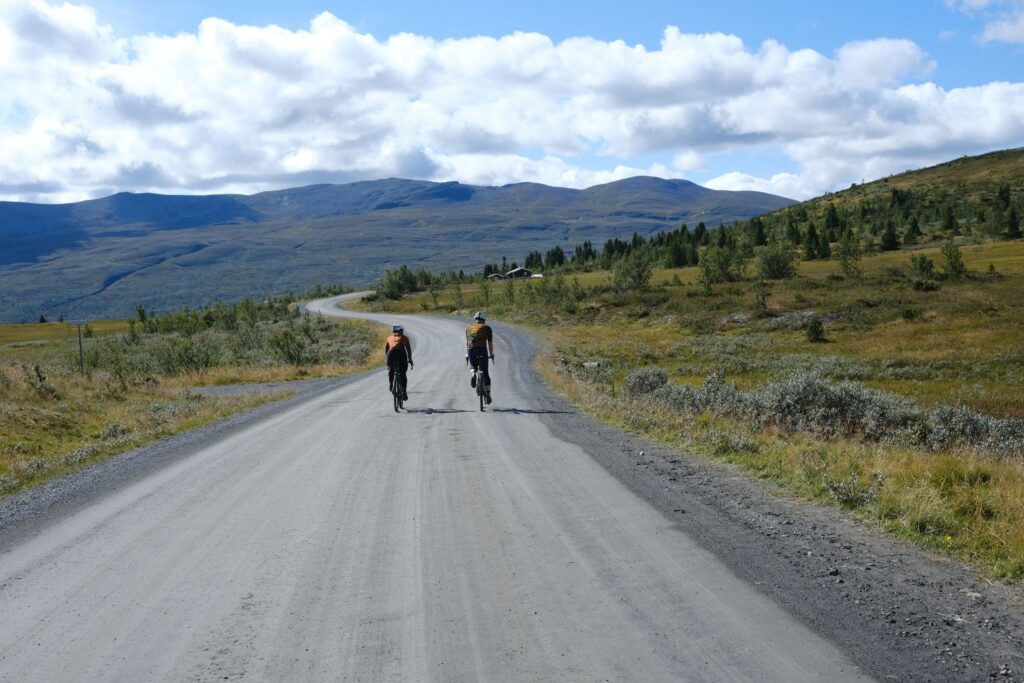
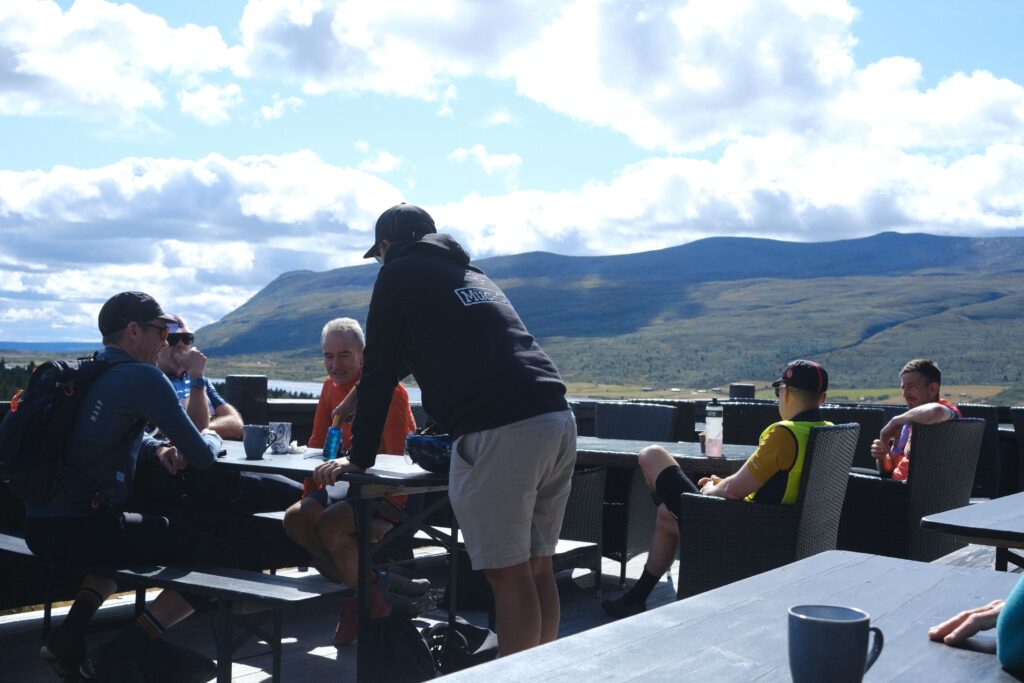
Then, finally, we arrive at Syndinstøga. The reward is exactly what we need: coffee, waffles and cold drinks outside in the sun. Once again, we seem to have found the perfect lunch stop.
Into the summer-farm landscape
We are now high up in the Stølsvidda area of Valdres, at around 900 to 1,000 metres above sea level. The landscape here feels very different from the rugged mountains of Jotunheimen that surrounded us yesterday.
Instead of steep peaks and glaciers, Stølsvidda is softer and more open, with rolling terrain, narrow trees, lakes and traditional summer farms. Cows and sheep graze beside the gravel roads, and small farm buildings are scattered across the landscape.
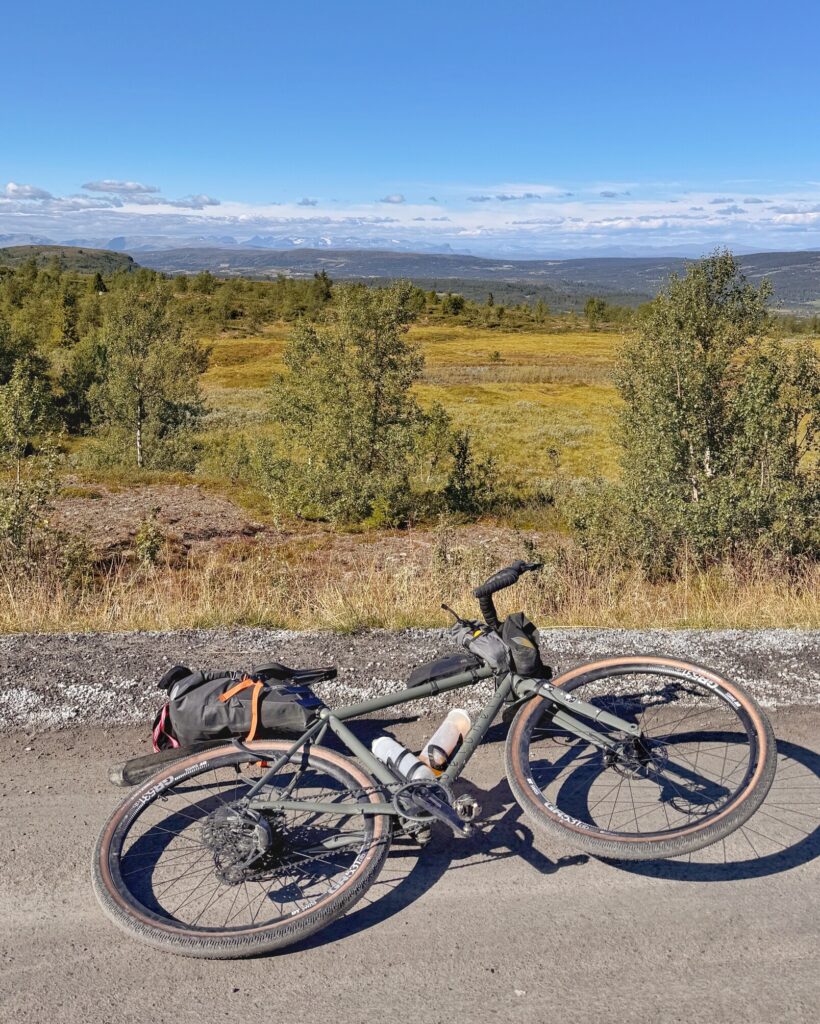
This is classic Valdres.
It may not have the dramatic high-alpine character of Jotunheimen, but on a gravel bike it is perhaps even better. Long gravel roads connect the summer farms, traffic is limited and the terrain constantly changes between small climbs, descents and open sections with views across the plateau.
And once again, the gravel itself is excellent. More champagne gravel for us!
Two ways to Gomobu
After our break at Syndinstøga, we split the group. Some continue along the more direct Mjølkevegen route towards Gomobu, while I head out with a few of the riders for an additional detour across the plateau. The kilometres slowly add up, but also the fun riding these cool gravel roads!
The terrain is mostly rolling now. Nothing quite compares to the long climb earlier in the day, but there are plenty of smaller hills to keep the legs working.
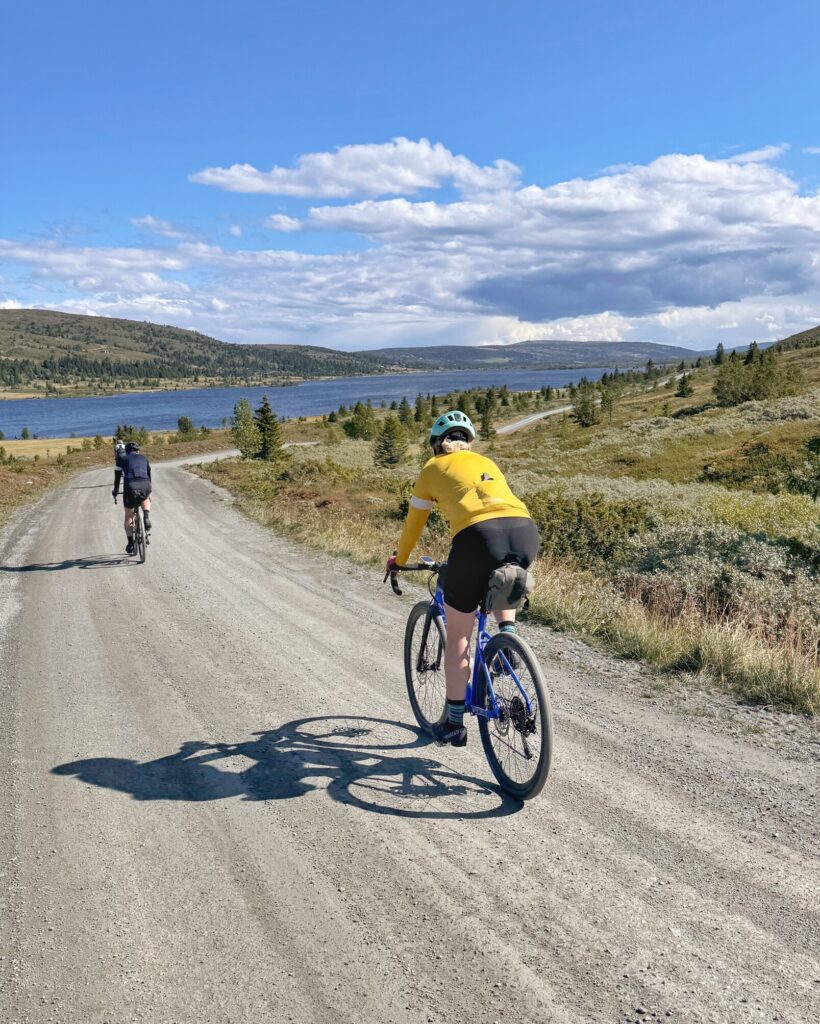
By this stage of the ride, everyone has already spent several hours on the bike, and even the smaller climbs start to feel a little bigger than they looked on the map that morning. And then comes the final surprise. To reach Gomobu, we still have roughly 150 vertical metres of climbing, with sections around ten percent.
After already climbing almost 600 metres earlier in the day, it is not necessarily what the legs are asking for. But everyone keeps going. One rider after another reaches the top, and soon we are all together again at Gomobu Fjellstue. The numbers for today tell part of the story: around 85 kilometres and 1,600 metres of climbing.
But they do not really describe the day. The calm water of Vangsmjøsa. The red farmhouses beside the lake. The long climb towards Syndinstøga. Coffee and waffles in the sunshine. Cows and sheep wandering around the summer farms. Endless gravel roads crossing the open plateau.
And finally, that last climb to Gomobu. Once the bikes are parked, we grab some well-earned drinks and sit outside in the sun, talking about the ride. There is that familiar feeling after a long day on the bike: tired legs, dusty bikes and plenty of stories from the road.
Another day of beautiful Norwegian summer weather.
Another day of champagne gravel.
And another very good day on the Mjølkevegen.
Stage 3 – From Gomobu to Geilo: The Long Day
There is a little more excitement around the breakfast table this morning. Everyone knows what is coming. Today we are riding more than 100 kilometres from Gomobu to Geilo, and although there are no huge mountain climbs like yesterday, this is perhaps the true definition of rolling terrain.
Lots of smaller climbs, one after another, slowly adding up over the course of the day. On paper, none of them look particularly frightening. After 80 or 90 kilometres, though, even a short climb can suddenly feel very different. But first things first.
We leave Gomobu at nine o’clock and start with a gentle climb back towards the Stølsvidda. Once again, the weather is on our side, and the morning gives us fantastic views across the surrounding mountains and summer-farm landscape.
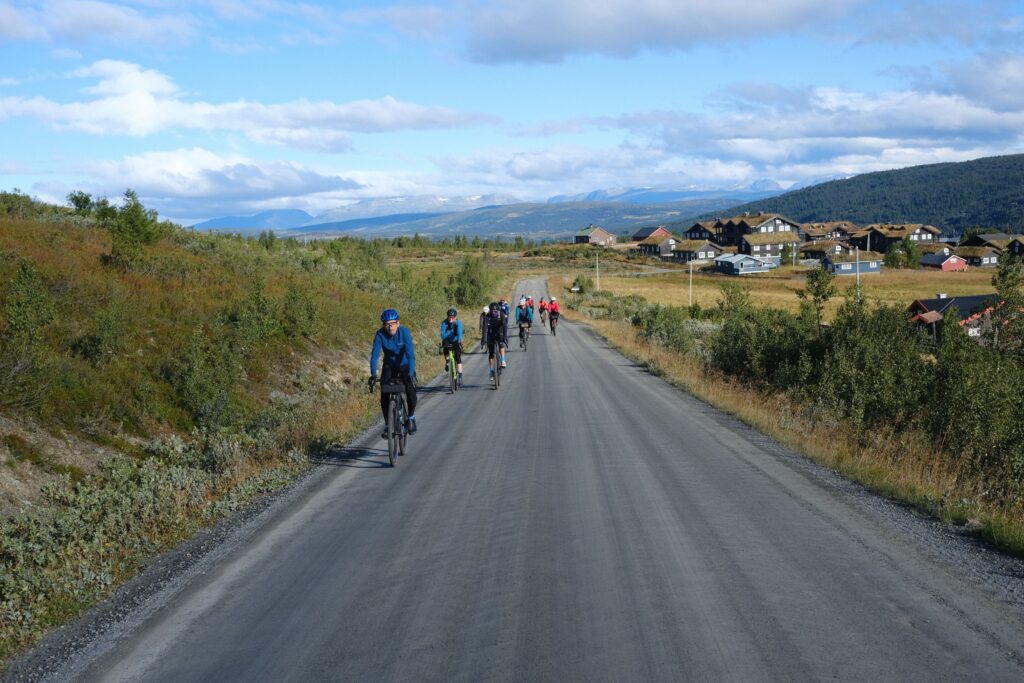
The legs are surprisingly good after the previous two days, and for the first part of the stage we are simply cruising.
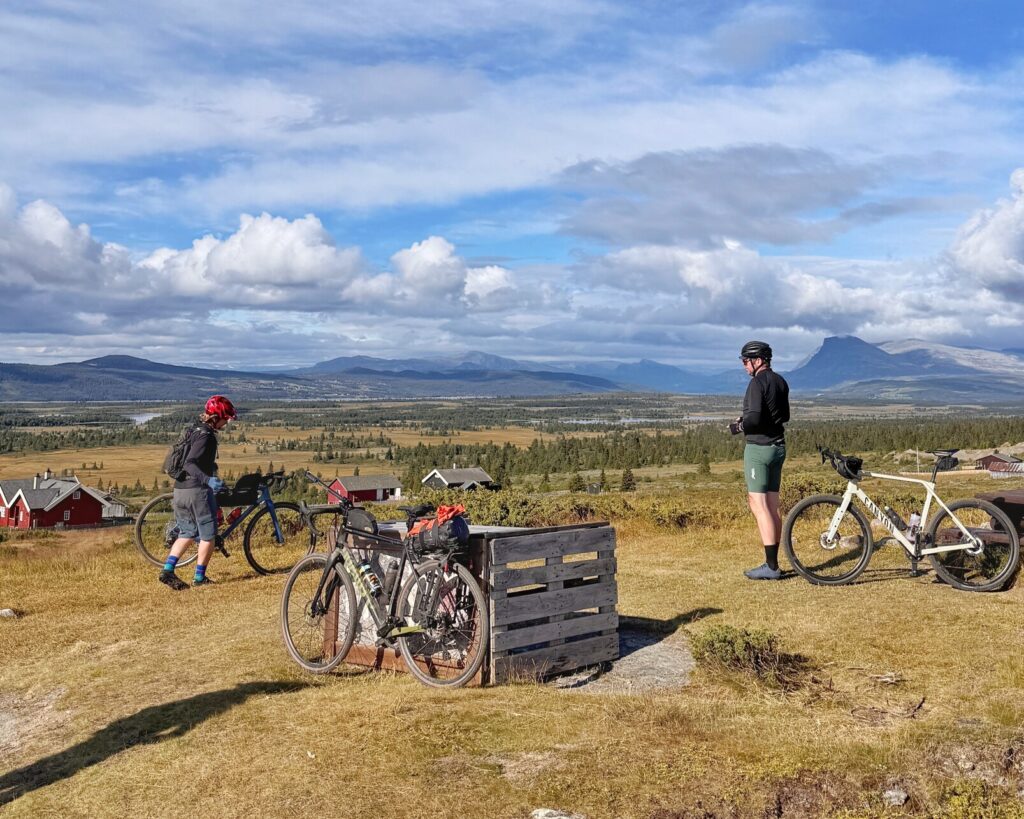
From the plateau, the road gradually turns downhill towards Kamben Fjellstue, where we make our first stop of the day. After around one and a half hours of relaxed riding, coffee and a few snacks are very welcome.
So far, everything feels quite easy. We all know that is going to change soon.
Down, down, down to Gol
Leaving Kamben, we start one of the most enjoyable sections of the entire trip.
For almost 20–25 kilometres, the road mainly points downhill towards Gol. After all the climbing of the previous days, it feels fantastic.
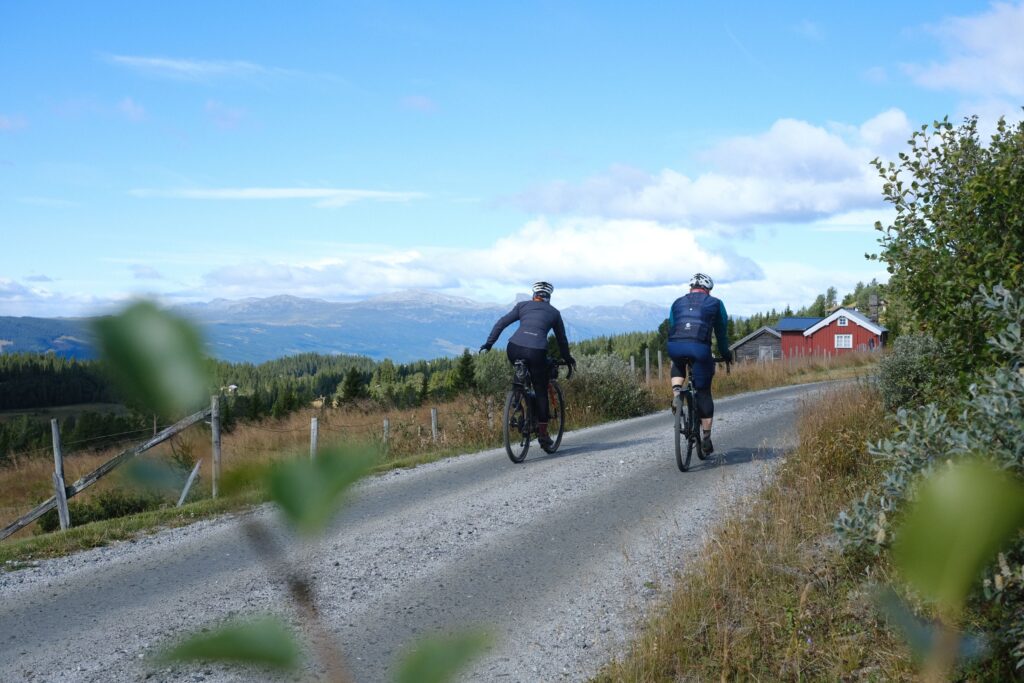
The bikes pick up speed, the kilometres disappear quickly, and we fly down from the mountains towards the valley. There are great views along the way, and for a while there is not much to do except enjoy the descent. Eventually, we roll into Gol.
And there is one place cyclists should always be able to find in a Norwegian town after a few hours on the bike: a bakery. Coffee. Pastries. Something salty. Something sweet. Preferably a little bit of everything.
We meet our luggage vehicle here as well, which gives us a chance to regroup and prepare ourselves for the second half of the day. There are still around 50–60 kilometres to Geilo. The easy part is over.
Following the railway towards Geilo
From Gol, our route more or less follows the railway line between Oslo and Bergen as we gradually work our way towards Geilo. The character of the landscape changes completely.
Gone are the wide-open mountain plateaus of the previous day. Instead, much of the route takes us along quiet gravel roads and tracks surrounded by forest.
On a warm summer day, that is actually very welcome. The trees give us shade from the sun, there is almost no traffic, and for long stretches we have the roads completely to ourselves.
We settle into a steady rhythm. Pedal. Small climb. Descent. Another climb. Another descent. Repeat. This is where the distance starts doing its work.
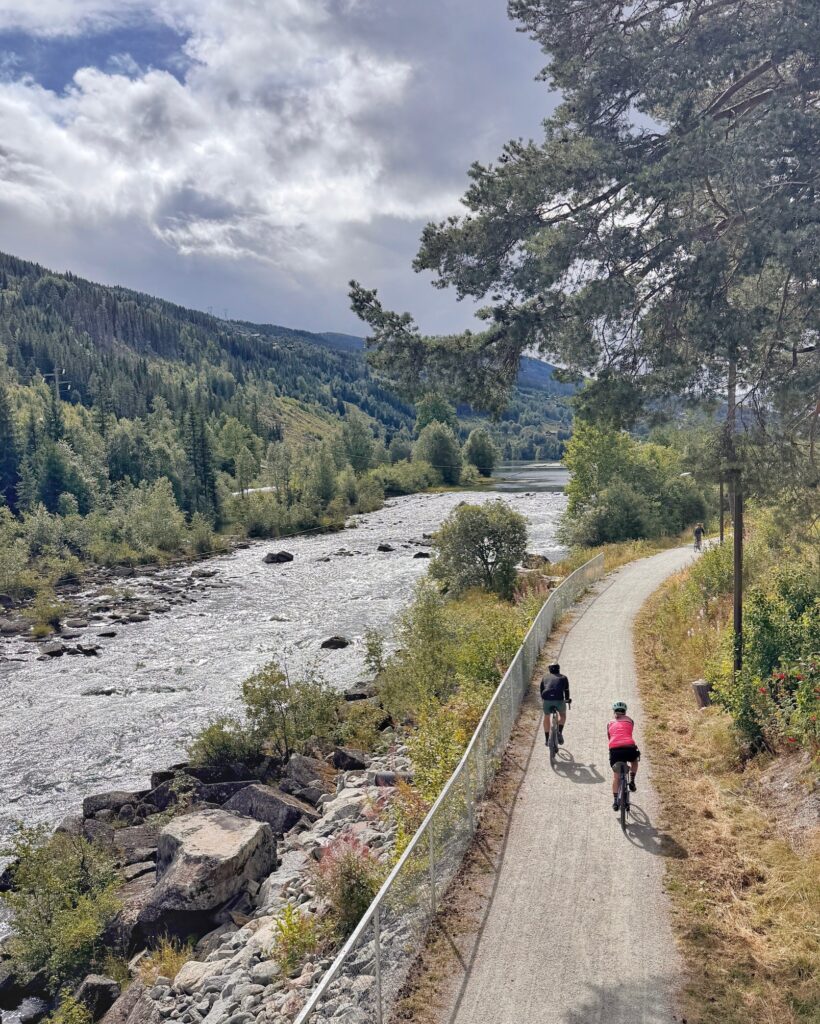
There is no single climb that defines the stage. Instead, it is the constant rolling terrain that slowly works on your legs. After several days of riding, everyone reacts differently. Some riders still look surprisingly fresh. Others are becoming quieter.
As a guide, these are the moments when I start watching the group a little more closely. Making sure everyone is eating, drinking and keeping a pace they can maintain. Because there are still plenty of kilometres ahead.
The little climb designed to break you
Just before Geilo, the route has one final joke waiting for us. It does not look like much on the map. Only about 40 vertical metres. But it is steep. Really steep. And after more than 100 kilometres of rolling terrain, it feels as though somebody deliberately placed this climb here simply to test how much strength we have left.
There is not much conversation anymore. You change into the easiest gear you have, look a few metres ahead and keep pedalling. Somehow, everyone gets over it. And shortly afterwards, Geilo finally appears.
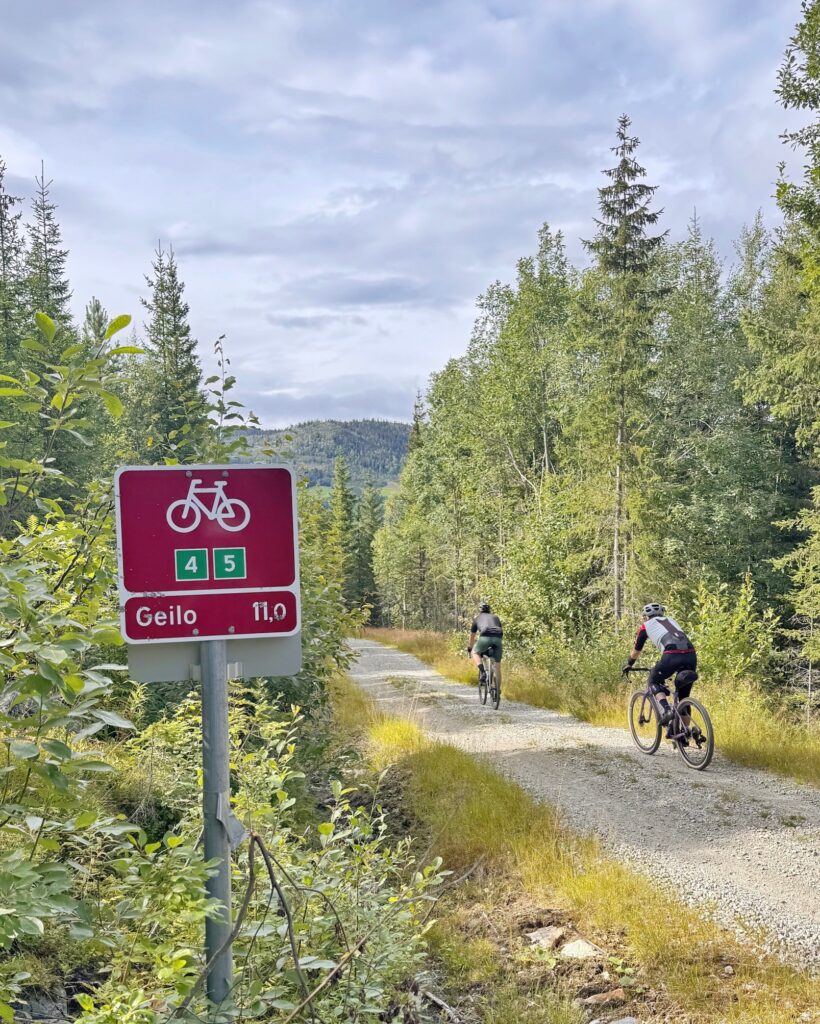
We arrive at our hotel after around 105 kilometres and 1,400 metres of climbing. A proper day on the bike. The first priority is obvious: park the bikes, find some cold drinks and rehydrate.
Soon we are sitting together again, tired but still in a very good mood, talking through the day’s ride. It has been a completely different stage from the previous two. Less high-mountain scenery, fewer dramatic peaks and more forests, valleys, quiet gravel tracks and long kilometres following the route towards Geilo.
And that is exactly what I enjoy about this journey. Every day has its own character. Tonight the legs deserve some rest. Because tomorrow we are heading further west. And for many of us, the stage ahead is the one we have been waiting for since the beginning of the trip.
Stage 4 – Rallarvegen: From the Mountains to the Fjords
This is the day everyone has been waiting for. Over breakfast in Geilo, there is definitely some excitement around the table. Today is the fourth and final big cycling stage of our Mjølkevegen and Rallarvegen Dream Combination, and ahead of us is perhaps the most famous cycling route in Norway: The Rallarvegen
I have ridden a lot of gravel roads over the years, but this is still one of those routes that feels special every time. Mountains, glaciers, railway history, rough gravel roads, long descents and, eventually, the fjords. It has everything.
So we drop our bags with the luggage vehicle for the last time, fill the water bottles, grab enough snacks for the day and roll out of Geilo at nine o’clock. The weather is still on our side. Time to ride.
Warming up towards Haugastøl
We begin on some smaller roads before eventually joining the main road towards Haugastøl. For roughly 20 kilometres, this is the section we simply need to do before the real adventure begins. It is asphalt rather than gravel and certainly not the most exciting part of the trip. But this morning, nobody really complains.
In fact, after three days of riding, having a smoother surface for some of the first climbs is not such a bad thing. We find our rhythm, warm up the legs and gradually gain altitude as we head deeper into the mountains.
Eventually, we arrive at Haugastøl. And this is where everything changes. We meet our luggage vehicle, refill bottles, eat something and prepare the bikes. In front of us is Rallarvegen.
Finally: Rallarvegen
Rallarvegen was originally built as an access and construction road for the workers building the Bergen Railway across the mountains more than a century ago.
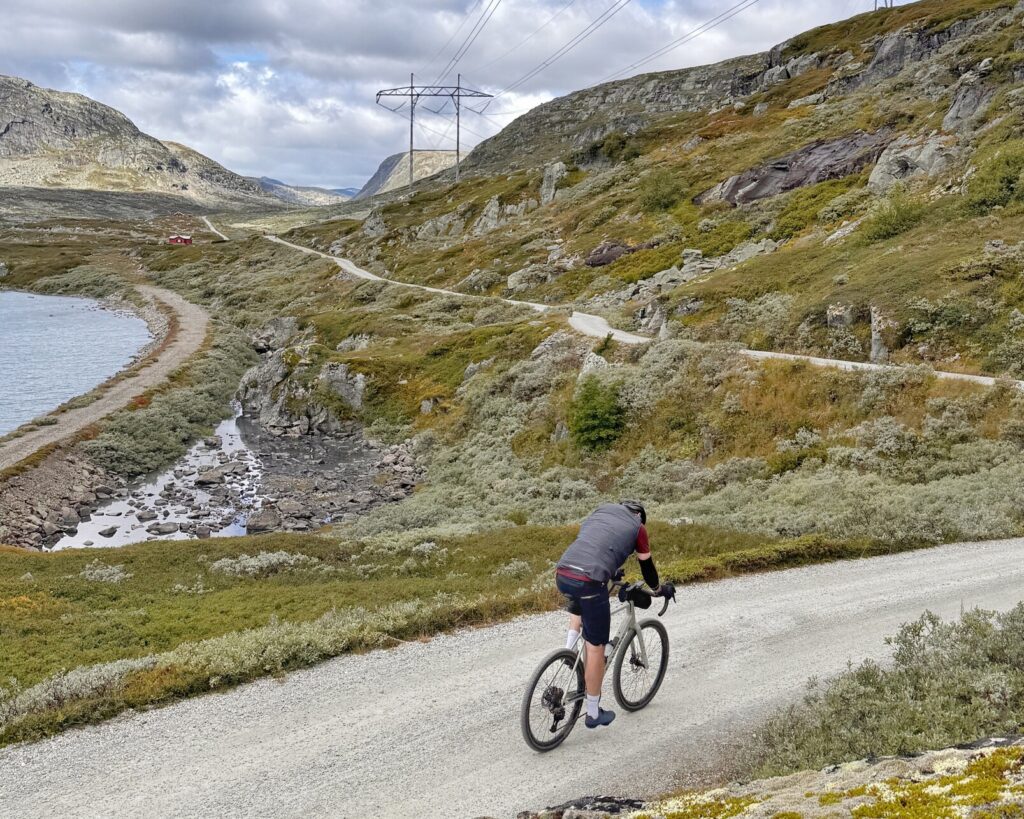
Today, it is one of Norway’s classic cycling routes. And today we are going to ride it in one big stage. We leave Haugastøl behind and start climbing gently into the vast mountain landscape of Hardangervidda.
Almost immediately, we are back where we want to be. Gravel underneath the tyres. Mountains around us. Very little traffic. Just bikes and landscape.
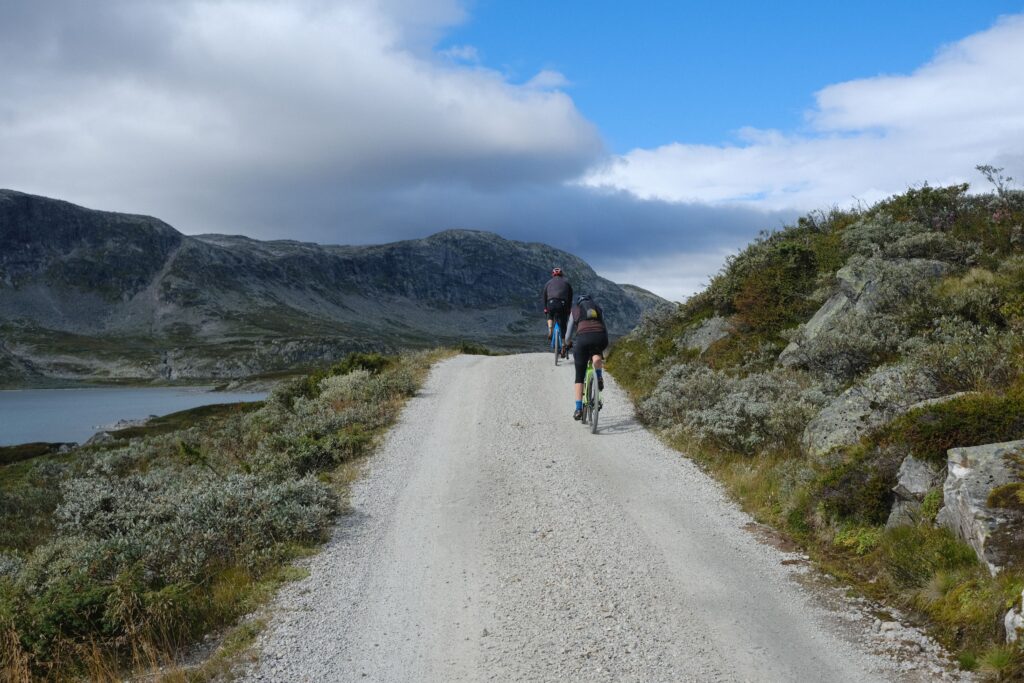
The terrain is again rolling rather than extremely steep, but yesterday’s 105 kilometres are still sitting in some of the legs. After several days of riding, you notice that everyone is starting the morning with a slightly different amount of energy.
A few riders are flying. Others have to work a bit harder today. But that is part of a multi-day gravel trip. You do not wake up every morning with completely fresh legs. Sometimes you just need to find your pace and keep going.
Reaching Finse
Little by little we make our way west towards Finse, home to Norway’s highest railway station at 1,222 metres above sea level.
And then there is Hardangerjøkulen.
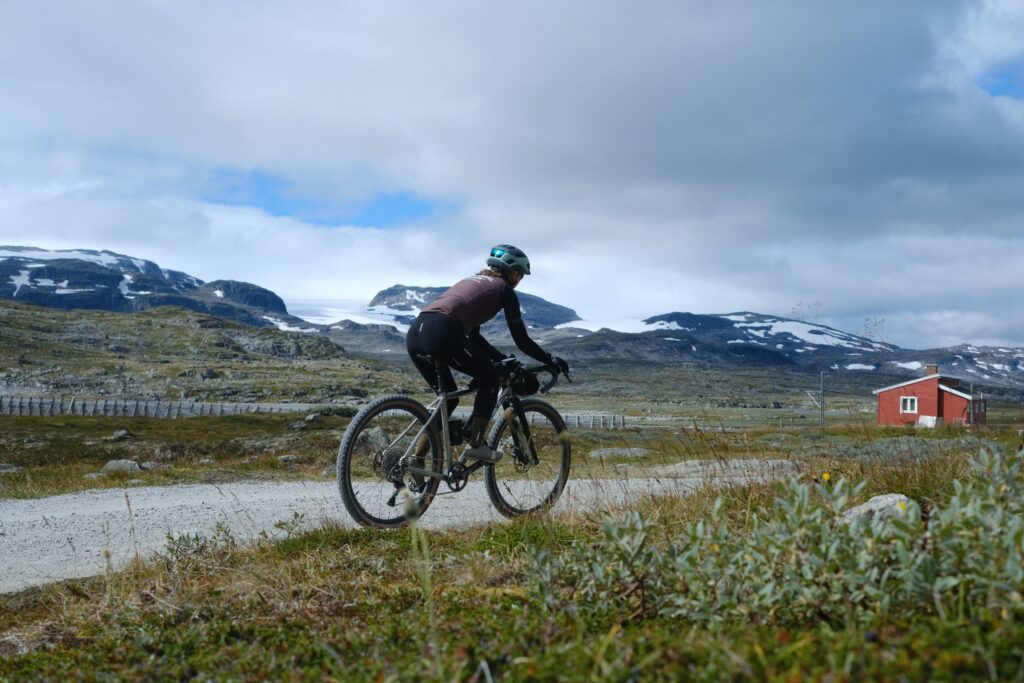
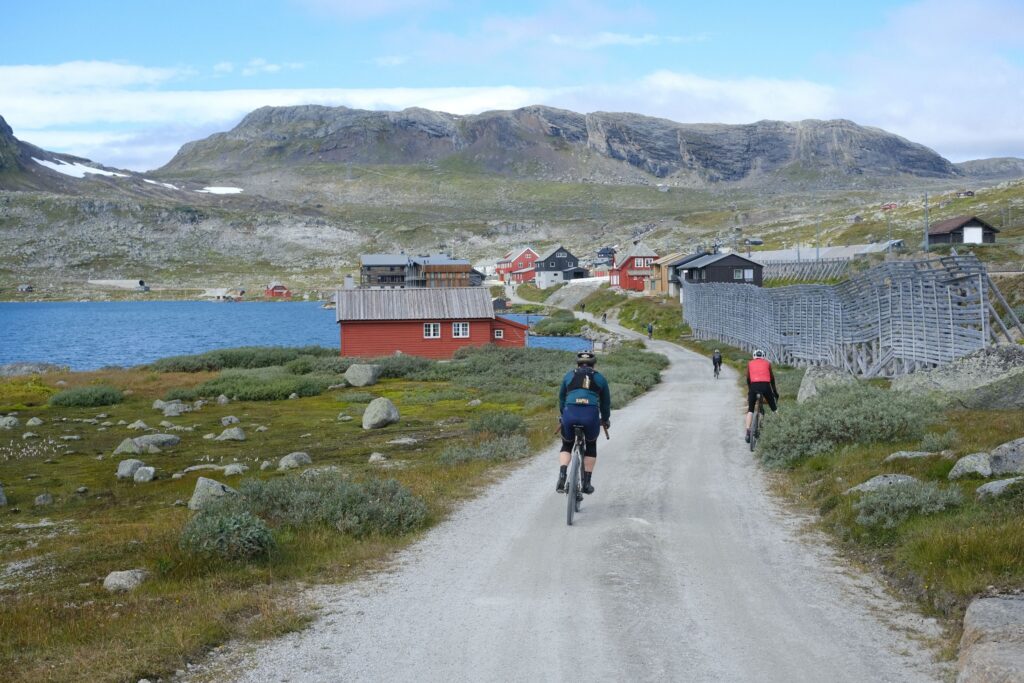
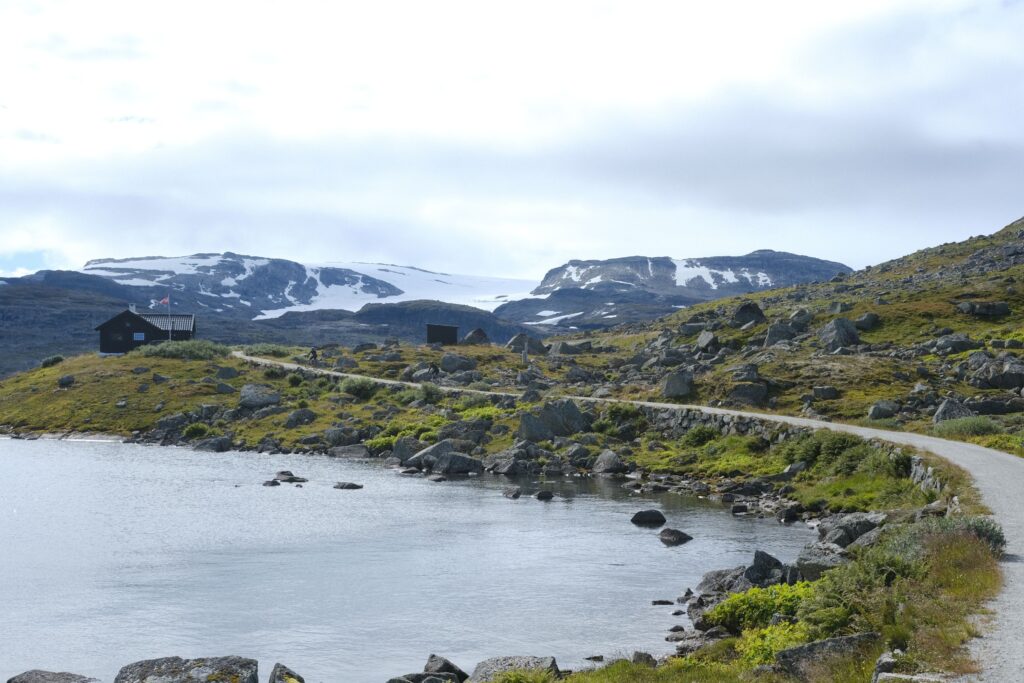
The huge glacier dominates the view and makes Finse feel like a proper high-mountain place. Today is a little colder than the previous days. The air is fresh, but conditions are still very good for riding. The track is in good shape, everyone is managing well, and the weather gives us clear enough views to really enjoy where we are.
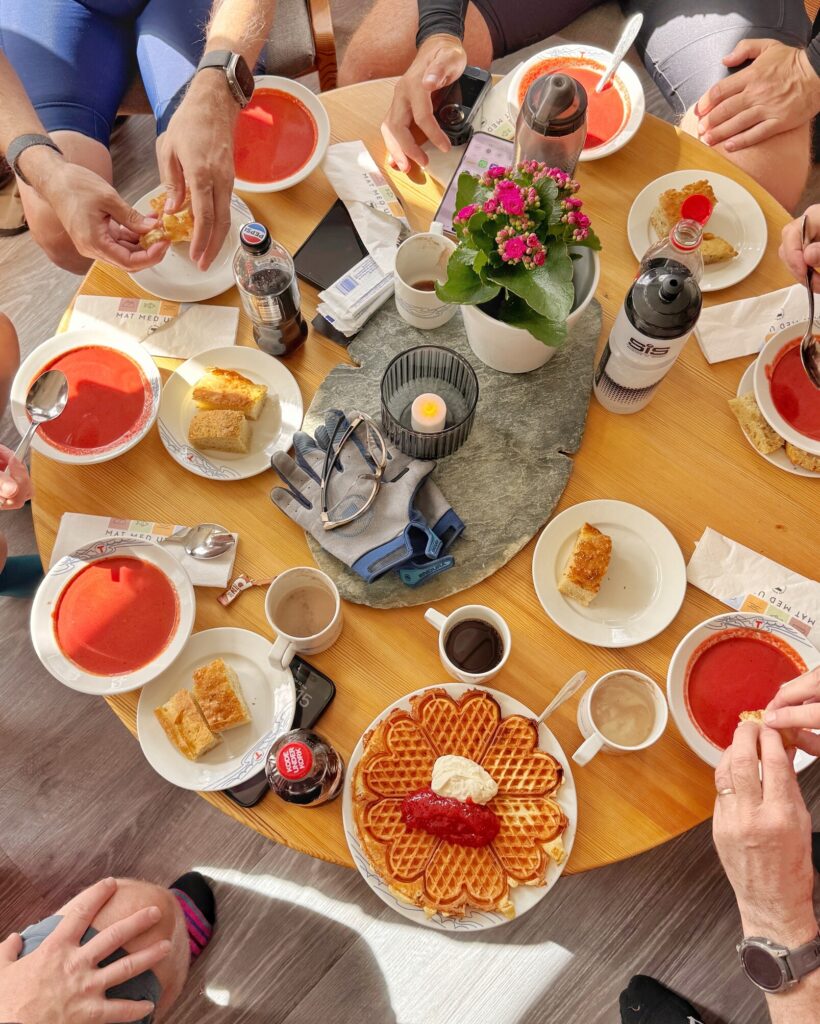
We roll up to Finsehytta, park the bikes and head inside. Time for another proper refuelling stop.
Coffee.
Warm soup.
Something to eat.
And, perhaps most importantly today, somewhere warm to sit for a little while. We spend almost an hour here, looking across towards Hardangerjøkulen and talking about the first part of the ride. But we are still a long way from Flåm.
Eventually, jackets go back on, bottles go back into their cages and we head outside. The fjords are waiting.
Up before we go down
From Finse, we still have climbing to do. The route eventually takes us up to around 1,350 metres, the high point of our journey. From there, something quite remarkable begins.
We are going to descend from the high mountains almost all the way to sea level.
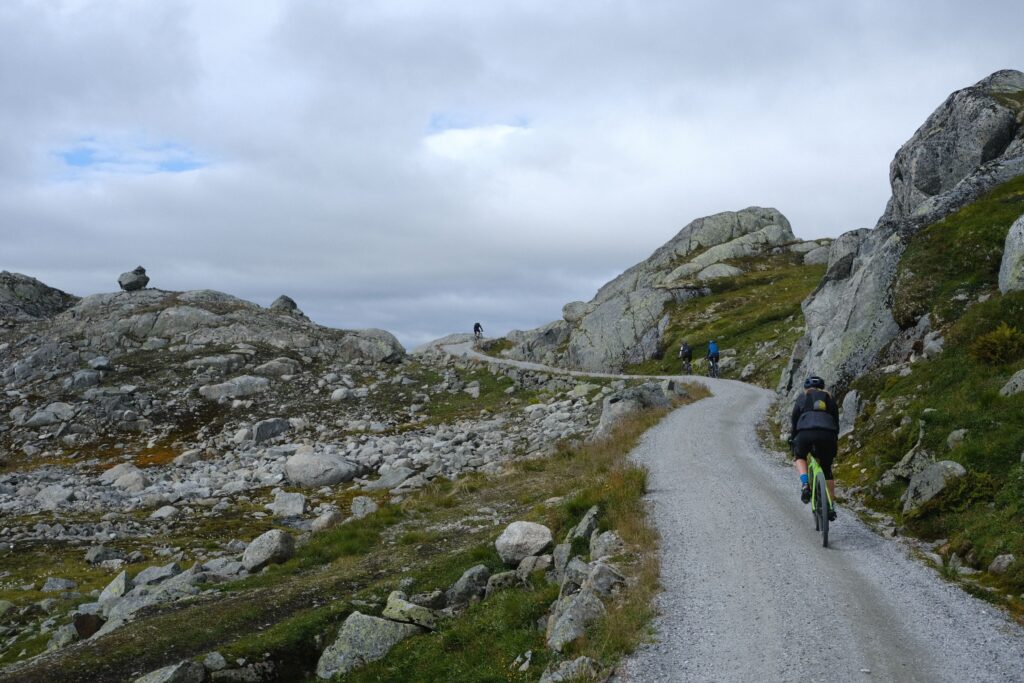
Not continuously, of course. Rallarvegen still has a few small climbs waiting for us and the terrain keeps us working. But overall, the direction is now very clear. Down.
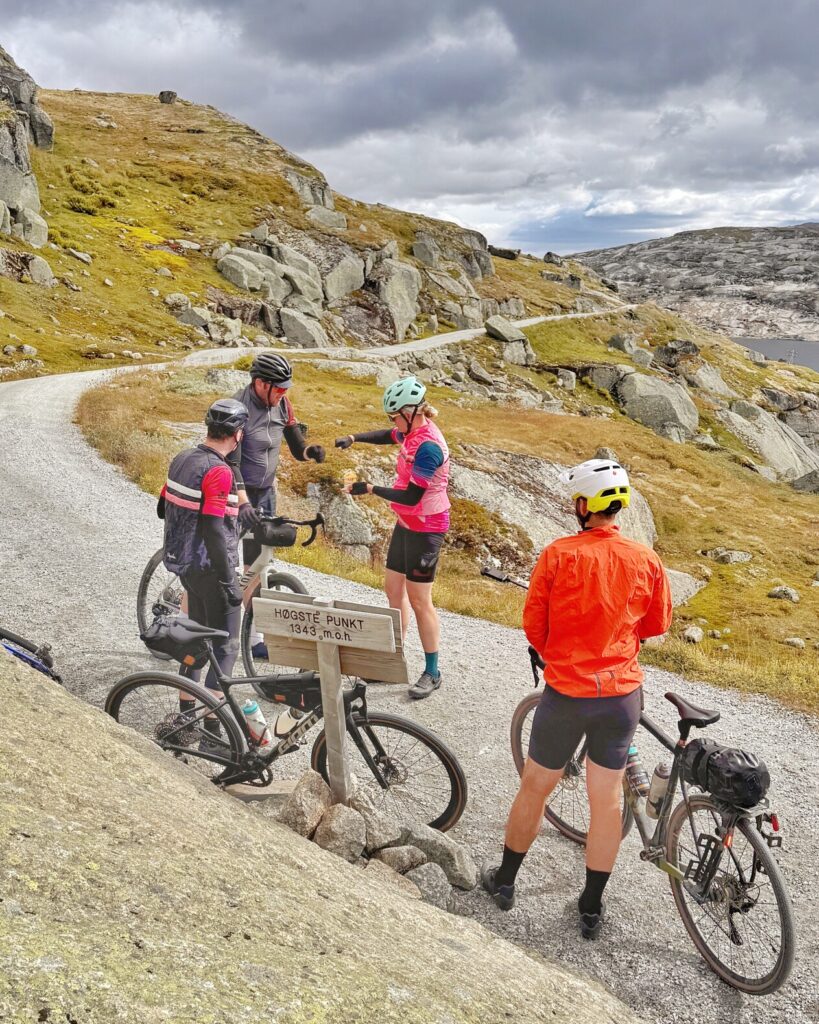
And suddenly the kilometres begin to disappear quickly. This is gravel cycling at its most enjoyable. We pick up speed on the descents, slow down for rougher sections and bridges, climb a little, and then accelerate again. Everyone seems to find some new energy. Yesterday’s tired legs are temporarily forgotten. We are simply having fun.
One of those cycling days
As we continue west, the landscape becomes more dramatic. There is something about Rallarvegen that is difficult to explain simply with kilometres and elevation numbers.
High mountain plateau.
Lakes.
Snowfields.
Glaciers.
Waterfalls.
Railway history.
And gravel road disappearing into the distance. During one of our regrouping stops, the conversations say everything. For several of the riders, this is already the best day they have ever had on a gravel bike. That is quite a bold statement. But looking around, I understand exactly what they mean.
The final challenge at Vatnahalsen
Eventually we arrive at Vatnahalsen. Before us is the last major challenge of the trip – and probably the section that makes some riders the most nervous.
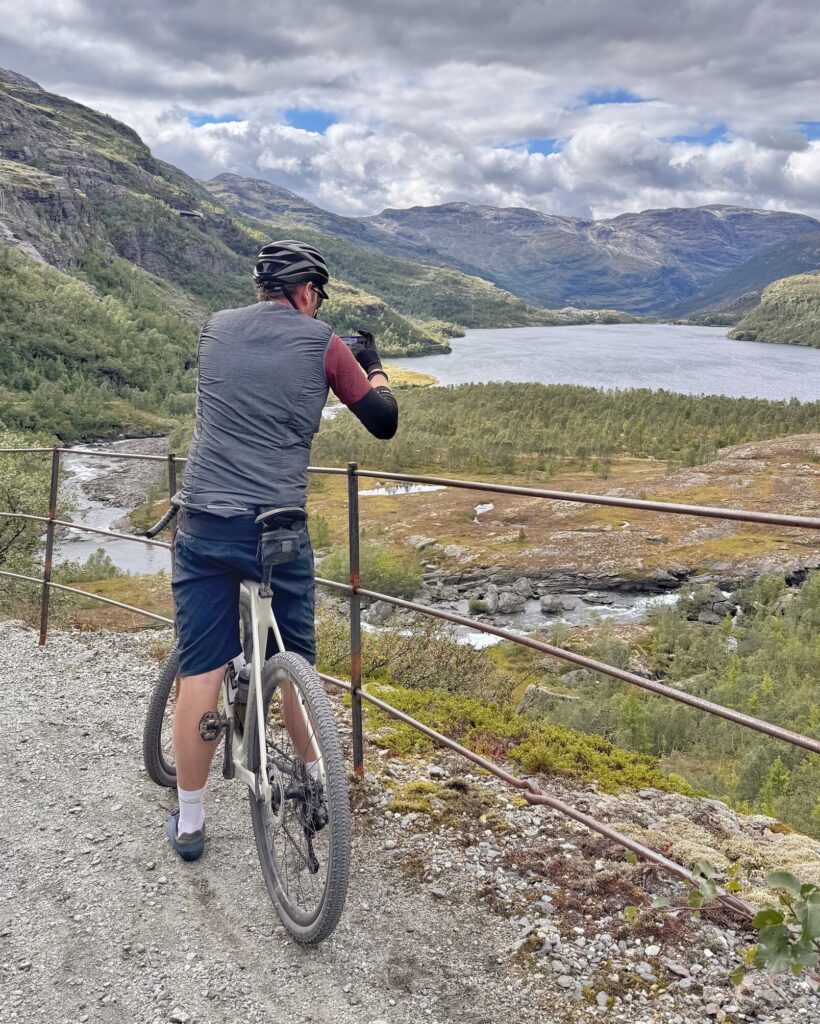
We stop at Vatnahalsen Hotel, regroup and have something to eat and drink. Everyone is talking.
About the day.
About the views.
About how crazy this route is.
And about what is coming next.
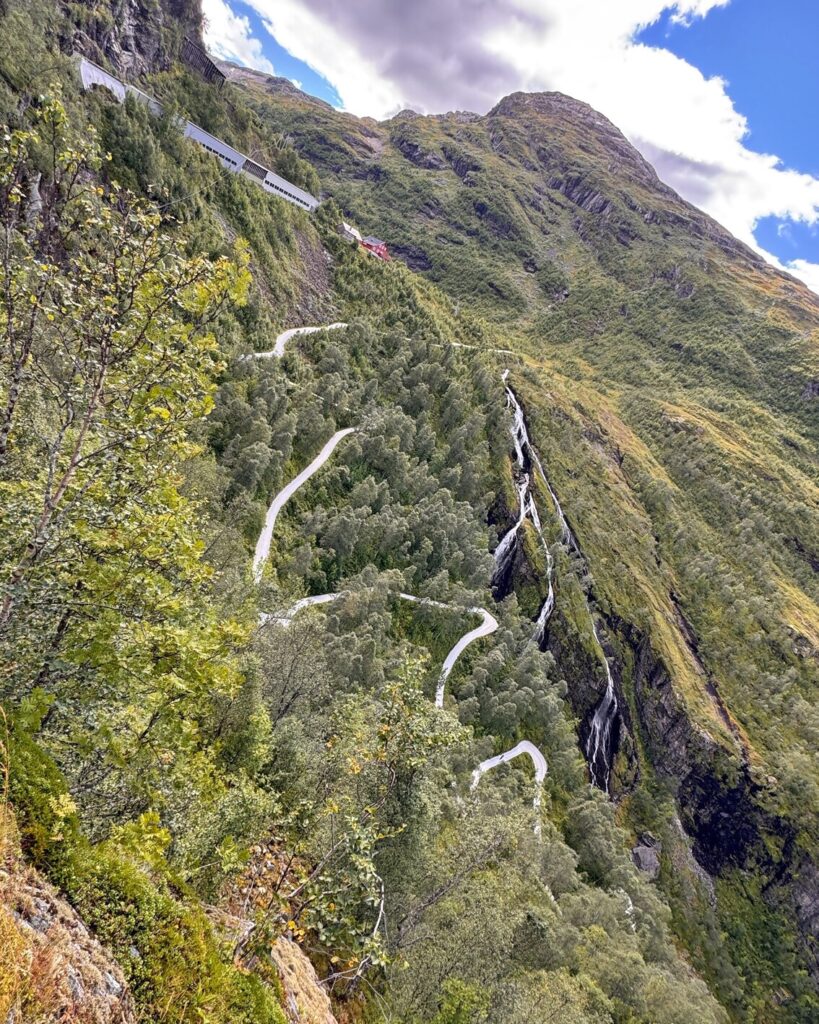
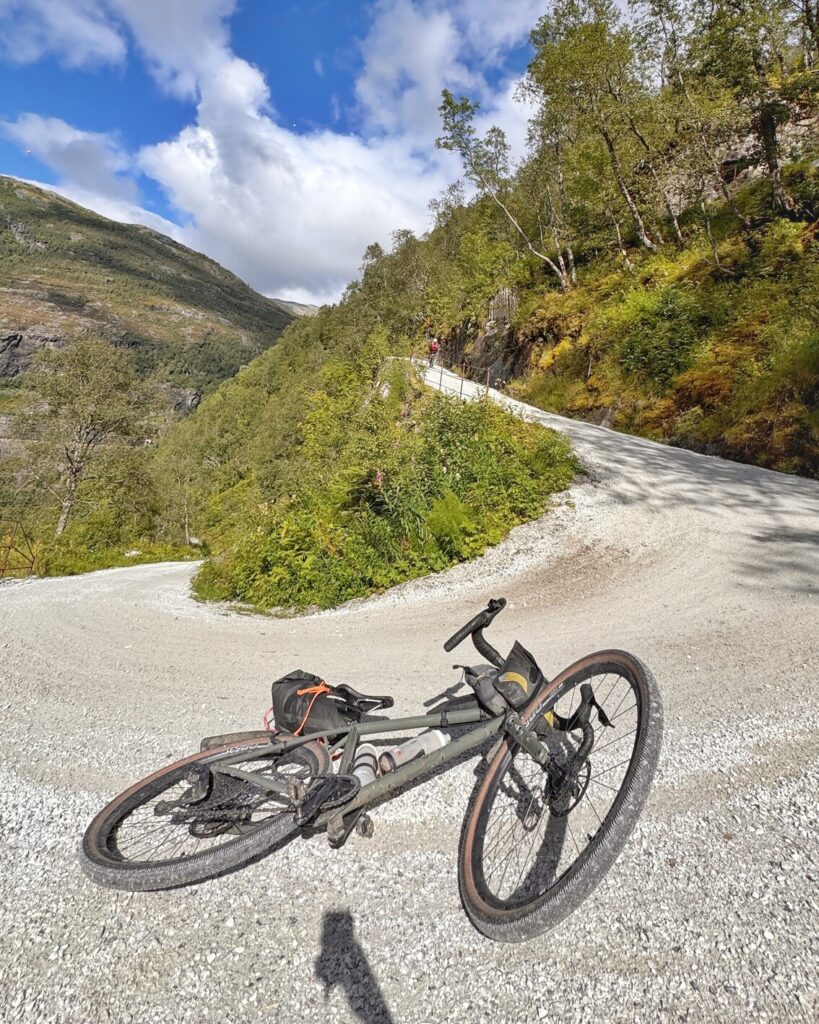
From the Myrdal and Vatnahalsen area, Rallarvegen drops steeply through a series of narrow switchbacks towards Flåmsdalen. For experienced mountain bikers, it is great fun. For someone who is less comfortable on steep gravel, it can definitely be intimidating. There is no prize for being the fastest here. We take our time. Keep enough distance between the bikes.
Control the speed.
Look ahead.
And ride within our own limits.
One after another, everyone makes their way safely down. And once we reach the bottom, you can almost feel the relief. We have done it.
From grey mountains to green valleys
From here, the character of the trip changes one final time. We leave the high mountains behind and enter Flåmsdalen. Suddenly everything becomes greener.
Waterfalls tumble down the mountainsides. Farms appear beside the road. The valley becomes increasingly lush as we lose the final metres of elevation.
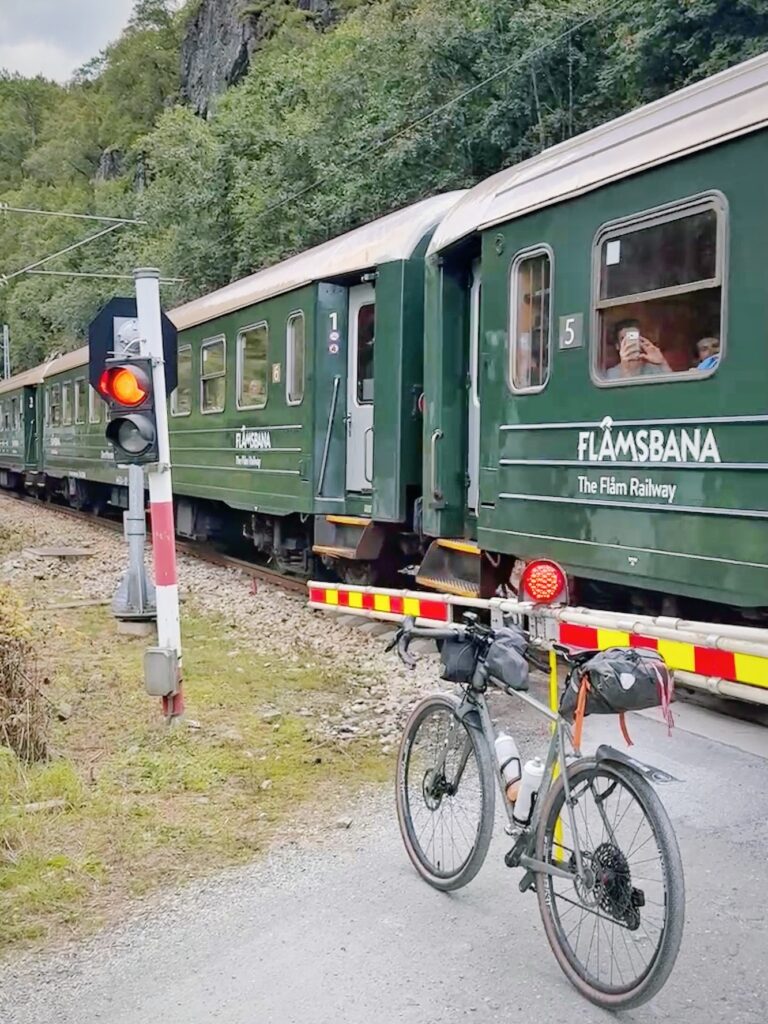
After spending the day high in the mountains, we are now cycling towards the fjord.
And then, finally, there it is: Flåm
It is busy. There are tourists everywhere. But there is a reason so many people come here. It is simply a beautiful place. And today it also marks the finish line of our gravel adventure.
Bikes down, glasses up
We roll into Flåm together and head straight for the pub. The bikes go against the wall.
Helmets come off.
Cold drinks arrive.
And we raise our glasses.
What a ride.
What a few days.
Across our four big stages we have ridden from the mountain landscapes of Valdres and Jotunheimen, across the summer-farm country of Stølsvidda, through forests and valleys to Geilo, over Hardangervidda and finally down Rallarvegen to the fjords.
And somehow, despite all those kilometres of gravel, we have made it without a single puncture or major mechanical problem. That alone deserves another drink. There are tired legs around the table, but plenty of smiles as well.
No doubt, this is the best day I have ever had on a gravel bike!
Tonight we can finally relax, enjoy a good dinner and look back at everything we have ridden during the past days.
Tomorrow the group travels onwards towards Bergen and eventually the airport. Bikes will go back into their boxes, people will head in different directions and our little gravel group will split up again.
But everyone will take something home with them.
The long climbs. The champagne gravel. Coffee and waffles in the mountains. Vangsmjøsa reflecting the blue sky. The endless rolling roads of Valdres. Hardangerjøkulen above Finse. The crazy descent towards Flåm. And that final cold drink beside the fjord.
For me as a guide, that is what makes trips like this so rewarding. We started five days ago as a group of people meeting for the first time at Ruten Fjellstue, unpacking bikes and wondering what the journey ahead would bring. Now we are sitting together beside the fjord with a lot of kilometres in our legs and even more stories to take home.
Mjølkevegen and Rallarvegen
Two very different cycling routes – One unforgettable gravel adventure across Norway.